Rollout Principles

Start with roles where speed and volume matter most
Calibrate internally before going live with candidates
Use scoring structure to reduce review time
Pair AI screening with proactive candidate communication
Design for candidate comfort
Put time back into high-impact recruiting work

Start with roles where speed and volume matter most

What Overjet did

  • Launched BrightHire Screen first for SDR roles with high application volume and clear qualification criteria.
  • Expanded to engineering and Solutions Engineer roles only after confidence and calibration improved.

Why it worked

  • High-volume, repeatable roles create faster learning loops.
  • Early wins reduced risk and built internal trust before expanding to more complex roles.

How to apply this in your hiring process

  • Begin with roles that are evergreen, high-volume, or top-of-funnel critical before expanding Screen to more specialized positions.

Calibrate Internally Before Going Live with Candidates

What Overjet did

  • Ran internal test interviews before launching Screen externally.
  • Included participants across seniority levels to validate scoring accuracy.
  • Adjusted rubrics when senior internal testers scored lower than expected.

Why it worked

  • Prevented early candidates from being assessed on an unrefined rubric.
  • Ensured fairness and consistency from day one.
  • Enabled confident deployment in days.

How to apply this in your hiring process

  • Test screening interviews internally and calibrate scoring before inviting candidates, especially for technical roles where nuance matters.
“Being able to test and calibrate screening interviews internally before going live ensured every candidate was assessed fairly and consistently from the start.”

Use Scoring Structure to Reduce Review Time (Not Oversight)

What Overjet did

  • Leveraged:
    • Auto-generated scoring criteria
    • Disqualifier questions
    • Unsecured questions
    • Concise interview summaries
  • Reviewed every Screen output, but avoided unnecessary rework.

Why it worked

  • Made qualification status immediately clear.
  • Reduced time spent “wading through” transcripts.
  • Preserved recruiter judgment while eliminating manual busywork.

How to apply this in your hiring process

  • Design screens so recruiters can quickly identify signal without losing control over final decisions.

Pair AI Screening with Proactive Candidate Communication

What Overjet did

  • Sent additional personalized emails explaining:
    • What the Screen interview is
    • What candidates should expect
    • Why AI is being used
  • Followed up personally when technical issues occurred.
  • Explicitly told rejected candidates that a human made the decision.

Why it worked

  • Reduced anxiety around AI.
  • Increased trust and transparency.
  • Protected employer brand during a non-traditional first touchpoint.

How to apply this in your hiring process

  • Treat communication as part of the screening experience, especially when AI is involved.
“We were able to increase hiring output and hit revenue-critical goals during a period of limited bandwidth—and without compromising the candidate experience.”

Design for Candidate Comfort, Not Performance Theater

What Overjet did

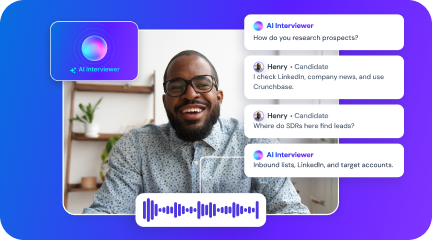
  • Audio-only format (no camera pressure)
  • Conversational, adaptive responses
  • Ability for candidates to move naturally during the interview

Why it worked

  • Reduced stress for candidates.
  • Made the experience feel “surprisingly human.”
  • Supported accessibility and inclusion.

How to apply this in your hiring process

  • Prioritize candidate comfort and clarity over rigid interview formality, especially in early screening stages.

Put time back into high-impact recruiting work

What Overjet did

  • Used hours saved from Screen to:
    • Support more senior and complex roles
    • Maintain momentum across multiple requisitions
    • Avoid burnout during recruiter transitions

Why it worked

  • Improved overall hiring velocity without adding headcount.
  • Allowed recruiters to focus where human judgment mattered most.

How to apply this in your hiring process

  • Treat AI screening as a force multiplier and redirect saved time to roles that benefit most from recruiter expertise.

Let the numbers do the talking

  • 9%

    month-over-month increase in SDR hires

  • 4.4

    4.4 / 5 average candidate experience rating

  • 17+

    recruiter hours saved

  • 4+

    hires made on BrightHire Screen in 3 months

Conclusion: Staying Vigilant in the New Era of Hiring

Rolling out AI screening successfully isn’t about moving faster at all costs — it’s about being intentional from the start.

Overjet’s experience shows that when BrightHire Screen is introduced thoughtfully, starting with the right roles, calibrating internally, and prioritizing candidate comfort, teams can scale hiring without sacrificing fairness, quality, or trust.

With the right rollout principles in place, BrightHire Screen becomes more than a screening tool. It becomes a force multiplier that gives recruiters time back, strengthens early-stage signal, and creates a hiring experience that feels structured, human, and built to last.


Streamline your interview process

while raising quality of hire.