






27%
Fewer interviews
per hire
per hire
28%
Faster feedback
submission
submission
19%
Reduction in
candidate drop offs
candidate drop offs
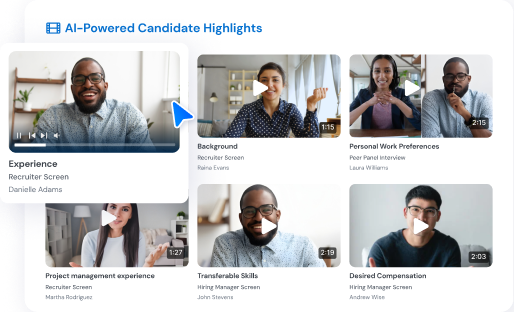




Structured interviews predict job performance at 2x the accuracy of unstructured ones.
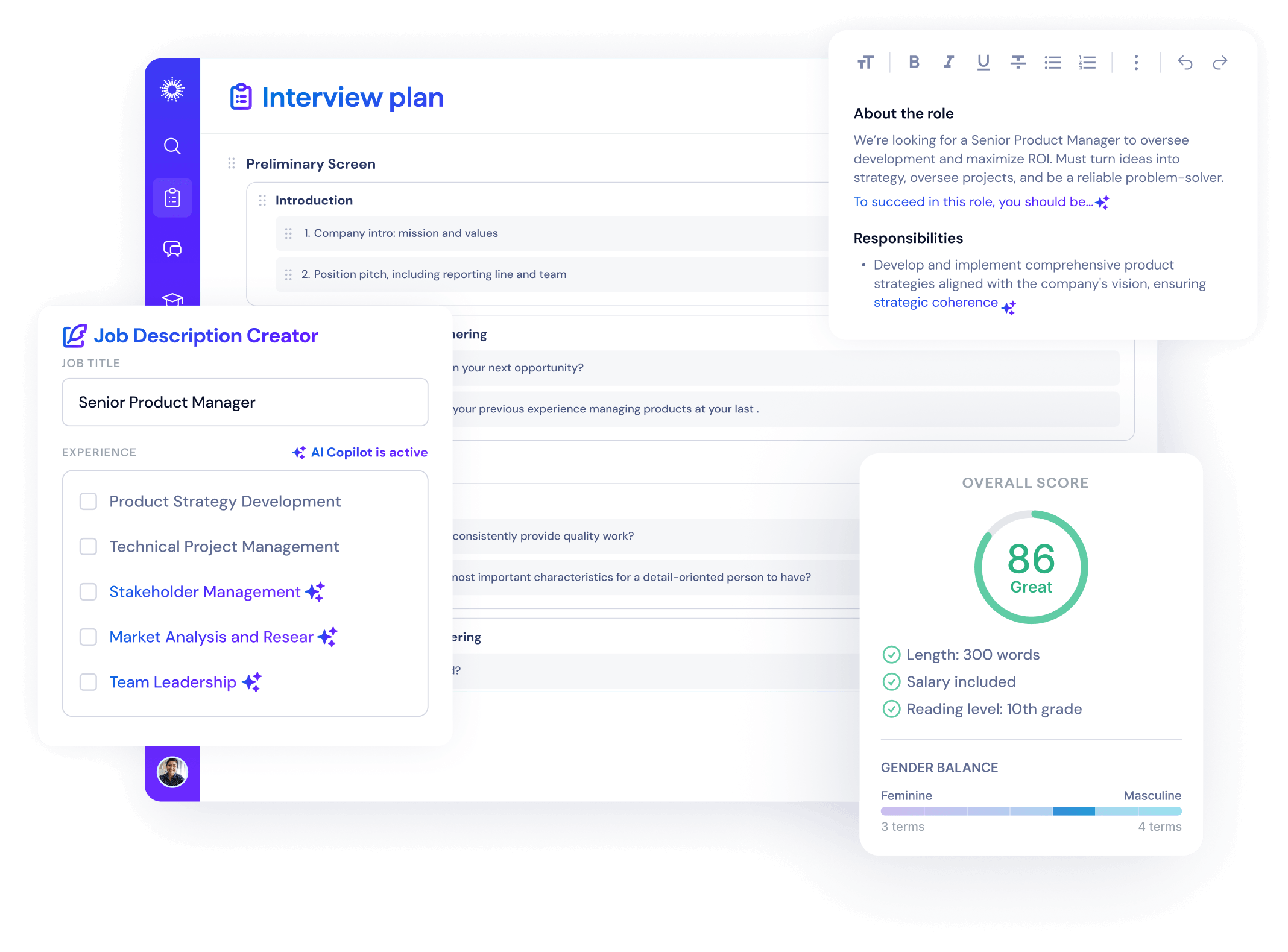
Quickly create inclusive job descriptions, evaluation criteria, and rubrics for every role with the help of our AI copilot.
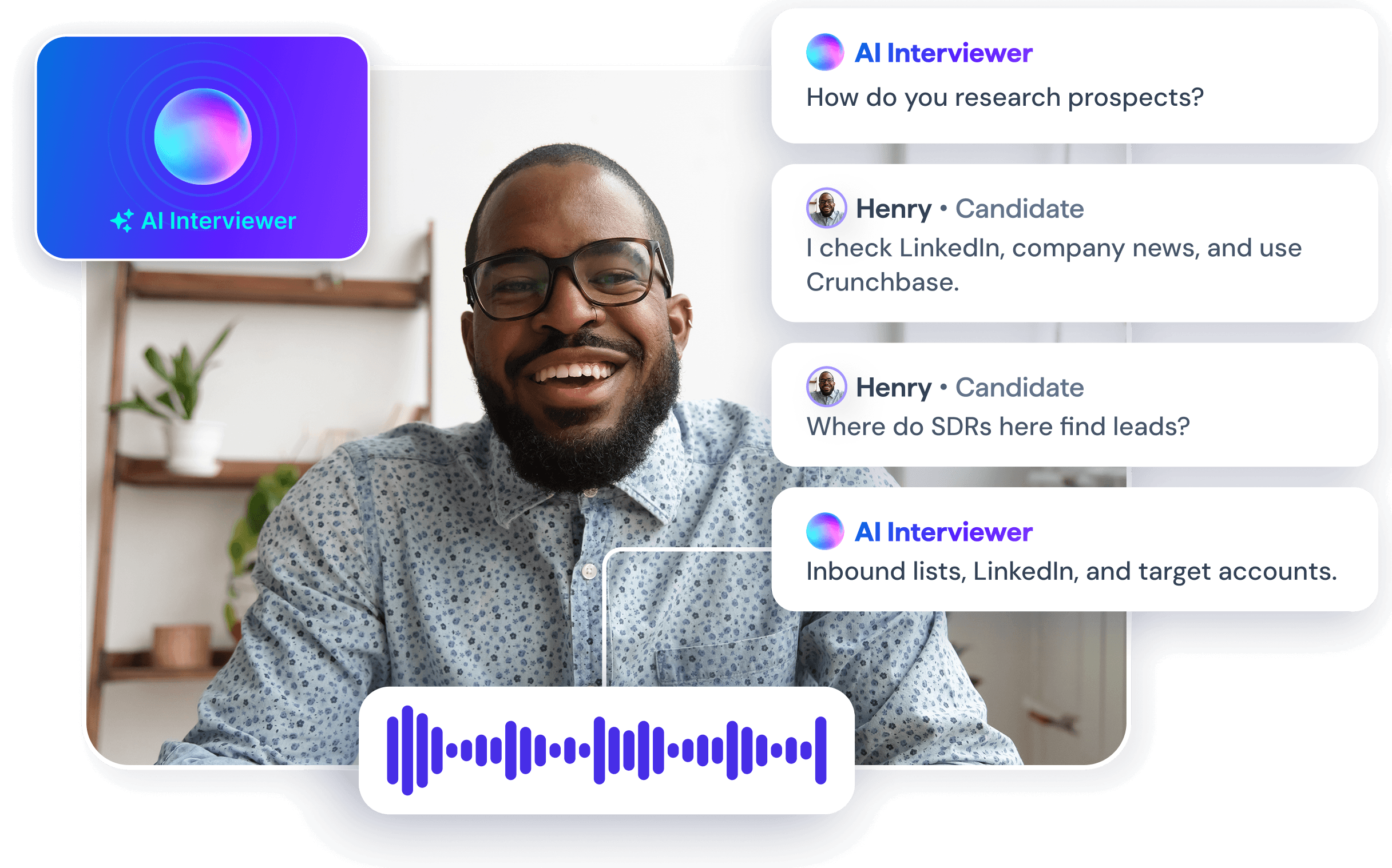
Run structured first-round interviews automatically with BrightHire Screen to surface top candidates faster.
Let our AI take notes so interviewers can truly focus on the candidate, while our interview copilot helps them consistently follow the interview plan.
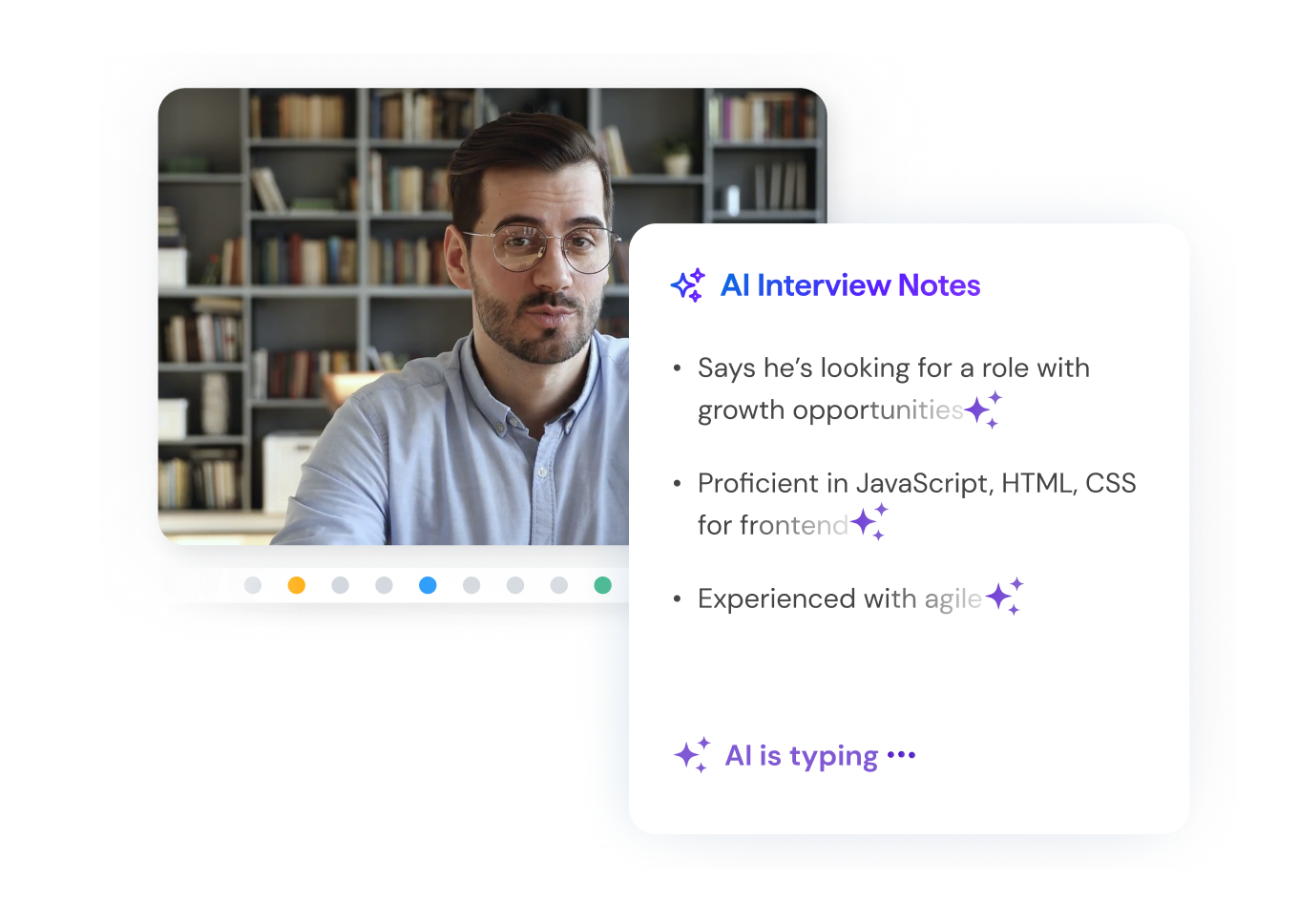
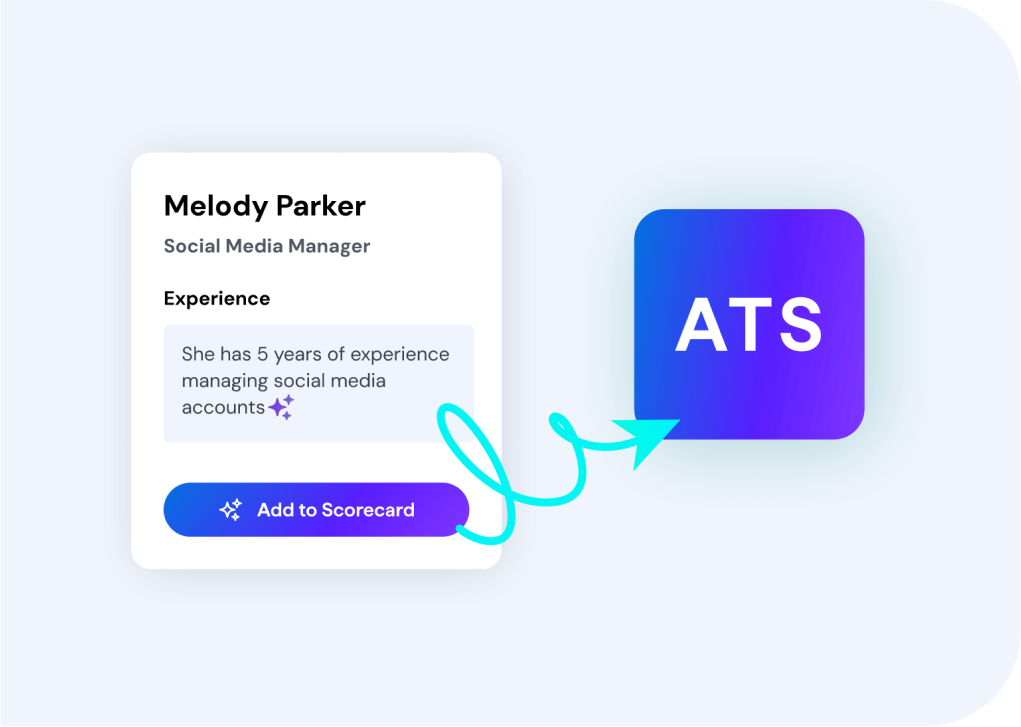
Get thorough, detailed AI-generated notes for every interview and enable your interviewers to complete scorecards in your ATS with a click.
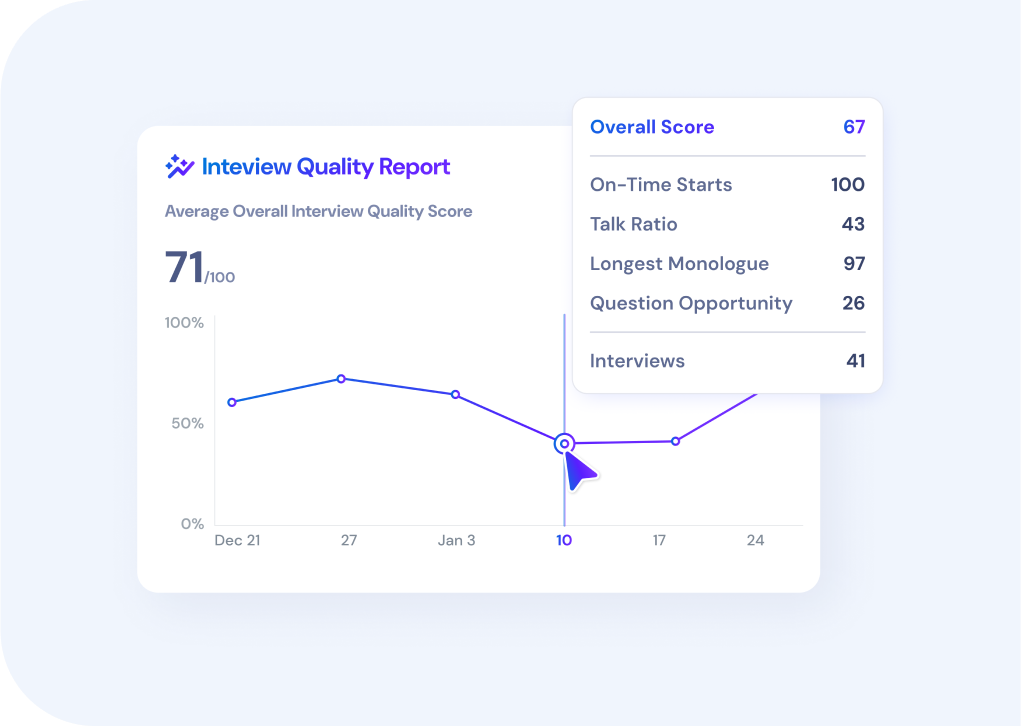
Get insights on interview quality across your team with a customizable Interview Quality Score. Automated coaching helps every interviewer get better after every conversation.


*Based on a real study across 25,000+ candidates on the impact of BrightHire.

“We need to bring efficiency and quality of hire, and BrightHire does that.”
Leading talent teams give BrightHire 4.9 stars on G2


Guides, research, and real-world examples to help your team build a better interview process.
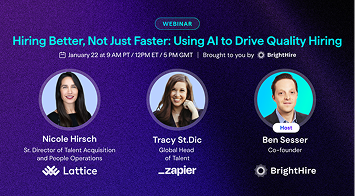
With leaders from Lattice and Zapier on why hiring quality is tied to interview quality.

A practical guide with insights from TA leaders who have done it successfully.
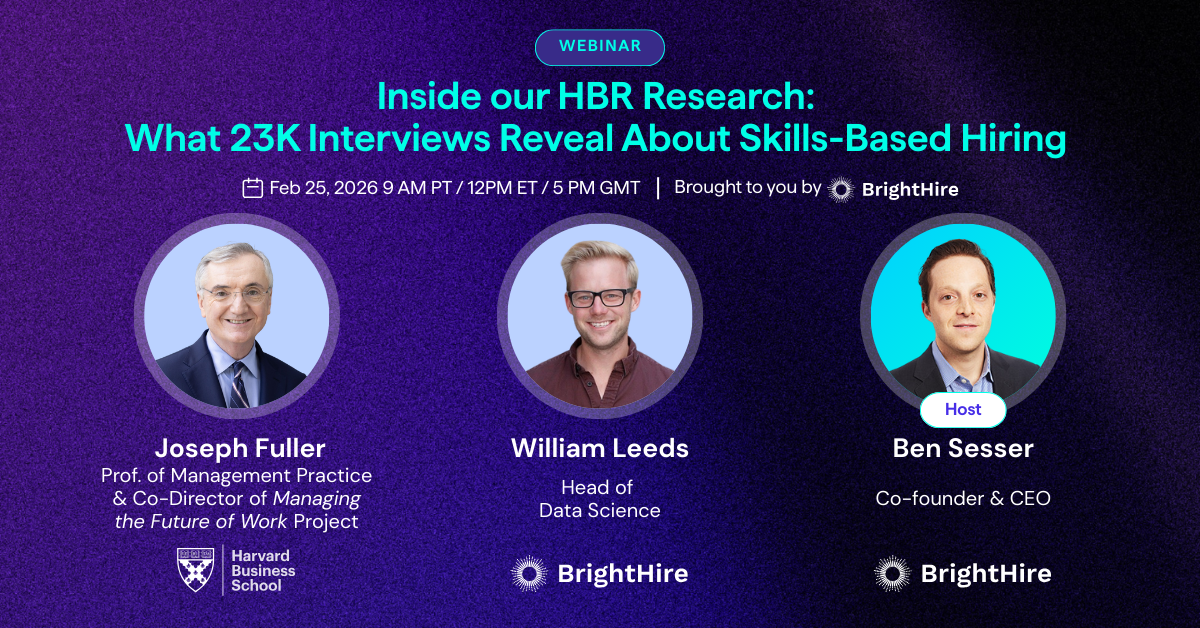
New research BrightHire contributed to data-driven hiring.

“Structured interviews beat gut instinct. BrightHire’s helping you make hiring faster, smarter, and fairer.”
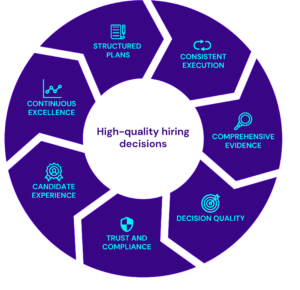
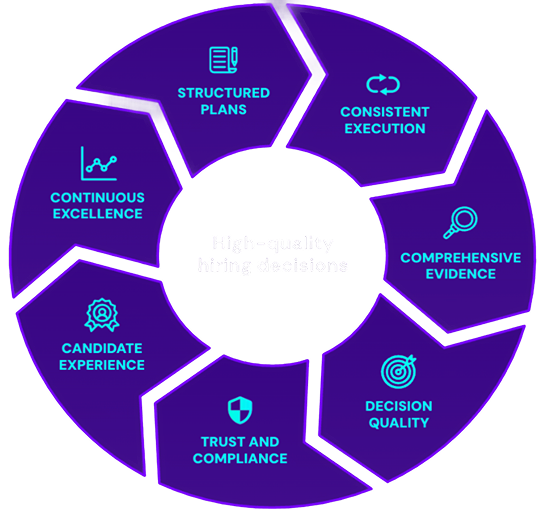
High-quality interviews are planned, structured, and produce evidence that gives a clear signal. That means interviewers go in with a clear guide tied to role-specific competencies, ask consistent questions across candidates, capture detailed notes and examples, and evaluate against shared criteria. While lower quality interviews may feel productive, they often leave the team with vague, hard-to-compare feedback. A high-quality interview gives decision-makers the specific, job-relevant evidence they need to hire with confidence.
Most teams treat quality of hire as a post-hire metric, relying on performance reviews, retention rates, or hiring manager satisfaction surveys months after someone starts. But by then, the damage from a broken process is already done. A more effective approach is measuring the quality of your interview process in real time. Are interviewers following structured plans? Is feedback thorough and timely? Are decisions grounded in evidence? BrightHire’s Interview Quality Score gives teams a customizable metric built on 10+ interview quality indicators, so you can improve the hiring process, not just measure outcomes after the fact.
Research from Harvard Business Review shows that structured interviews predict job performance at 2x the accuracy of unstructured ones. In practice, teams using structured processes see fewer mis-hires, faster decisions, and less rework. BrightHire customers have seen 27% fewer interviews per hire and 28% faster feedback submission, which means less interviewer time per role, faster time-to-fill, and lower cost-per-hire. But the biggest return comes from the hires themselves. When your process consistently surfaces the right candidates and gives decision-makers trustworthy evidence, you avoid the six-to-nine-month cost of a bad hire.
In most teams, debriefs default to whoever speaks loudest or remembers the most recent conversation. Critical evidence gets lost, and decisions end up being made based on impressions rather than facts. Interview intelligence changes this by capturing structured evidence from every interview and making it accessible to every stakeholder before the debrief. Instead of relying on memory and incomplete notes, hiring committees can review detailed candidate summaries, compare evidence across interviewers and stages, and ground their discussions in what actually happened. Teams make faster, more aligned decisions with less bias.
Make it easier to follow the process than to skip it. Most hiring managers don’t resist structure because they disagree with it. They resist it because it adds friction. Building a plan from scratch takes time, staying on track during a live conversation is hard, and writing detailed feedback afterward feels like a chore. BrightHire removes that friction. AI generates structured interview plans in minutes, a real-time copilot keeps interviewers focused during the conversation, and AI-powered notes capture evidence automatically so interviewers can stay present with the candidate. When the structured process is the path of least resistance, adoption stops being a change management problem.
No. Unstructured processes feel fast but create slowdowns downstream: vague feedback that requires follow-up, misaligned debrief discussions, and repeated interviews because the first ones didn’t produce a usable signal. Structured interviewing removes that rework. Every interview has a clear purpose, feedback is thorough and comparable, and decision-makers get the evidence they need to move quickly. BrightHire customers have seen 27% fewer interviews per hire, not because they’re cutting corners, but because each interview produces a stronger signal. Structure makes hiring both faster and better.
Training teaches principles: how to ask good questions, avoid bias, and evaluate candidates effectively. It’s valuable, but it depends on interviewers remembering and applying what they learned in the moment. Interview intelligence applies those principles in real time, on every interview, at scale. AI-generated interview plans ensure the right questions are asked. A real-time copilot keeps interviewers on track during the conversation. AI notes capture evidence automatically. And automated coaching delivers personalized feedback to every interviewer after every conversation, based on what actually happened, not a generic training module. Training builds awareness. Interview intelligence makes sure best practices are actually followed.
