






TL;DR: Key considerations when evaluating candidate fraud detection vendors include false positive rates, ATS integration depth, verifiable hiring records, candidate experience impact, interviewer adoption, and the range of fraud signals the tool can detect. Detection that runs during the interview can reduce adoption friction and create a more complete hiring record than standalone verification steps added before or after. Detection runs inside the interview, so it doesn’t add a separate verification step. Deepfake detection does require explicit candidate consent.
Candidate fraud doesn’t lead to just be a bad hire. An imposter who passes your process gains system access, data access, and the organizational trust that comes with a signed offer letter. Your interview process is now a security control point, whether or not it was designed to be.
Accuracy matters when evaluating a fraud detection tool, but it’s only part of the picture. “What is your false positive rate?” and “where does detection happen in the interview?” are equally important questions. A detection rate without a corresponding false positive rate tells you nothing about whether your candidates will tolerate the tool. And where detection runs determines whether the tool fits your existing workflow or adds operational overhead. Ask vendors exactly where detection runs and what writes back to the candidate record.
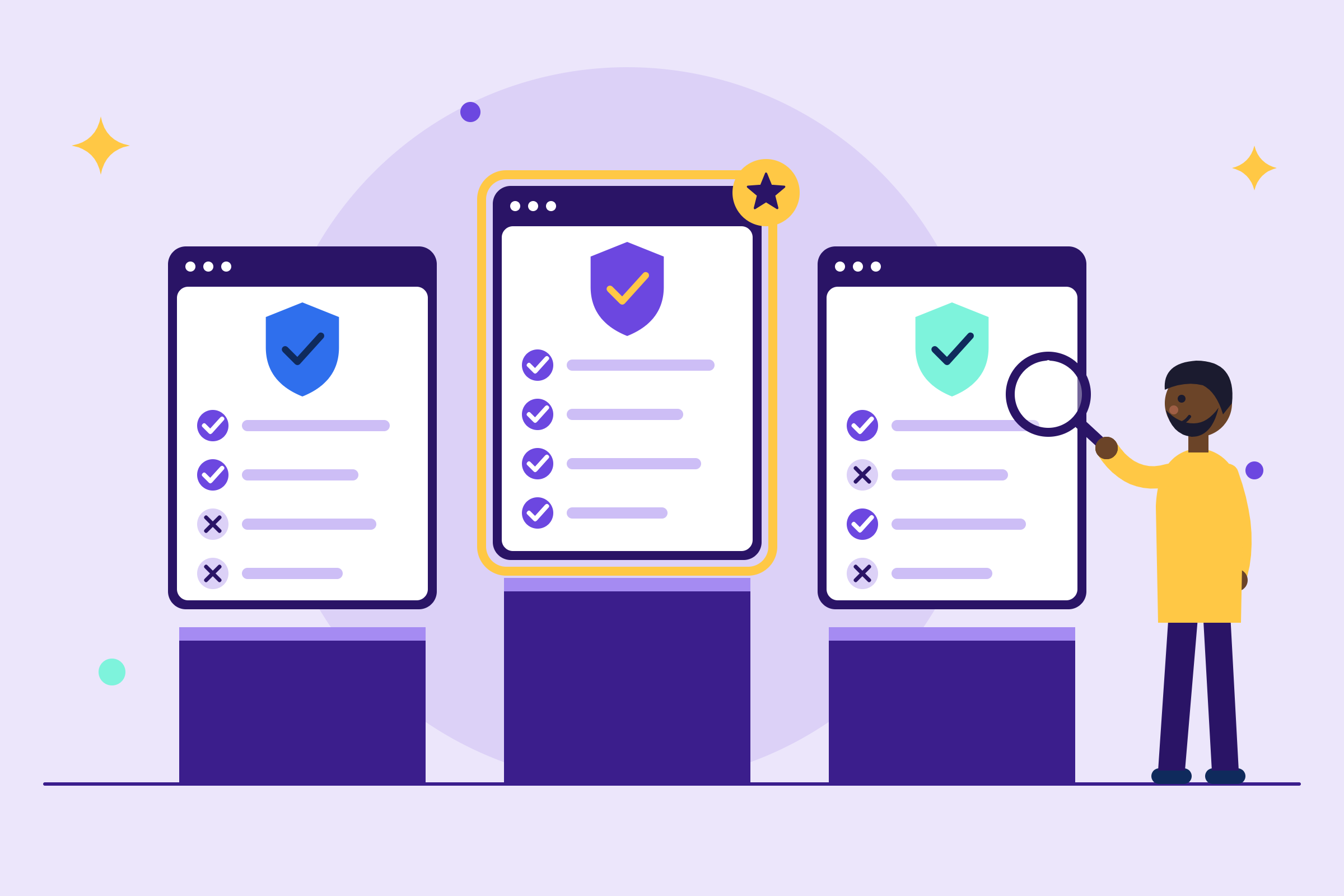
This guide gives you a five-point framework for evaluating the full range of candidate fraud detection tools with specific questions to ask at each stage of procurement.
Securing your pipeline against candidate fraud
Candidate fraud has moved from resume inflation to coordinated impersonation, deepfakes, and AI-assisted cheating.
Identify modern candidate fraud tactics
Proxy interviewing, deepfakes, AI-assisted cheating, and identity swaps are four common tactics worth understanding before you evaluate detection tools.
- Proxy interviewing occurs when someone other than the real applicant answers the questions, either by standing in completely or feeding live answers through audio or video.
- Deepfakes use video tools to let a proxy candidate appear on a video call wearing someone else’s face.
- AI-assisted cheating relies on tools that quietly generate answers off-screen while the candidate reads them aloud.
- Identity fraud involves a candidate using a stolen or fabricated identity to pass background checks and gain system access.
Fraud prevalence and what detection systems capture
Checkr’s 2025 Hiring Hoax Survey found that 31% of hiring managers have interviewed a fake candidate, and GetReal Security reports that 41% of IT, cybersecurity, risk, and fraud leaders say their company has hired and onboarded a fraudulent candidate. Detection systems can capture session metadata, analyze video and audio streams, and surface risk signals to the hiring team. Some systems run during live interviews, while others operate at different stages of the hiring process.
The consequences extend well beyond a bad hire. KnowBe4 documented its own incident in which a fake IT worker used a valid but stolen US identity and an AI-enhanced photo, passed four video interviews and a background check, and began loading malware as soon as the company workstation arrived. Both the financial and security dimensions matter for the business case you may build with Finance and IT.
Core evaluation criteria for hiring fraud detection vendors
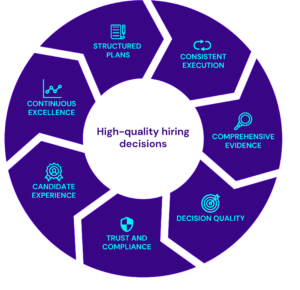
When evaluating fraud detection vendors, focus on the range of fraud signals the tool can detect and how detection works, false positive rates, ATS integration depth, verifiable hiring records, candidate experience impact, and interviewer adoption. Each criterion maps to a specific failure mode you’ll own if the tool doesn’t deliver. A vendor who can detect deepfakes but not proxy interviewing or AI-assisted cheating leaves gaps in your coverage, and those gaps matter most in the roles with the highest system access risk.
Measure false positives in screening interviews
False positives create candidate drop-off and recruiter overhead. When a legitimate candidate is incorrectly flagged, the review process slows the hiring loop, and qualified candidates with other offers in hand may not wait. Every false positive also adds manual review time that scales poorly at high volume. The false positive rate is the percentage of legitimate candidates incorrectly flagged for review, and it’s the number that tells you whether the tool is calibrated for your hiring population.
Request false positive rates, not just detection rates, from any vendor you evaluate. AI surfaces signals for human review, but humans make the final call.
Assess native ATS integration depth
Strong ATS integrations put scorecards and risk flags in the candidate record where your team already works, rather than requiring a separate login. We integrate with Greenhouse, Lever, Ashby, Workday and more, as well as video conferencing platforms like Zoom, Microsoft Teams, and Google Meet. The integration runs in both directions: when a candidate finishes a BrightHire Screen early-round screening interview, we push the overall score, a structured summary, and a completion notification back into the ATS.
Confirm which fields sync, in which direction, and at what trigger before procurement. Find out how the integration writes data: does it write to named fields, append to existing records, or overwrite the whole record?
Vendor integration checklist
When assessing ATS integration depth, focus on these four areas:
- Confirm the vendor can push interview scores and summaries directly into the ATS candidate record, so the hiring team works from one place rather than switching between systems.
- Check whether candidate records update automatically after each interview, reducing manual data entry and the risk of incomplete records.
- Ask whether risk signals surface inside the ATS candidate record or in a separate vendor portal, and confirm where the audit trail is accessible when your team needs to review a flagged candidate.
- Ask the vendor directly whether the integration logs flags, timestamps, reviewer actions, and decisions. This varies by ATS and vendor, so verify before procurement.
Build a verifiable hiring record
Detection signals must be auditable. The record shows what was flagged, when, and what the human reviewer decided. Compliance and legal review depend on this. We’re GDPR and CCPA compliant.
Mitigate candidate drop-off risks
Liveness checks and identity verification add friction. Every candidate-facing step that falls outside the interview itself is an opportunity for drop-off, and the most qualified candidates often have the most options and the least tolerance for unnecessary process.
Fraud detection runs in both live interviews and early-round screening interviews. BrightHire Screen is an AI interviewer that runs asynchronously, so candidates complete early-round screening interviews on their own schedule without a recruiter joining the call. At Angi, candidates gave BrightHire Screen a 4.8 out of 5 satisfaction rating, which suggests that detection running in the background doesn’t materially affect how candidates experience the process.
Ensure high interviewer adoption
Interviewers often won’t adopt a tool that adds steps to their loop. SHRM reports that the biggest challenge in implementing new HR software isn’t a technical hurdle but human behavior. The less the tool changes how an interviewer runs a call, the lower the adoption risk at rollout.
Interview-integrated vs. point solution fraud detection
Where detection runs in the hiring process affects whether the tool fits your existing workflows or adds operational overhead that reduces adoption.
Define interview-integrated fraud detection
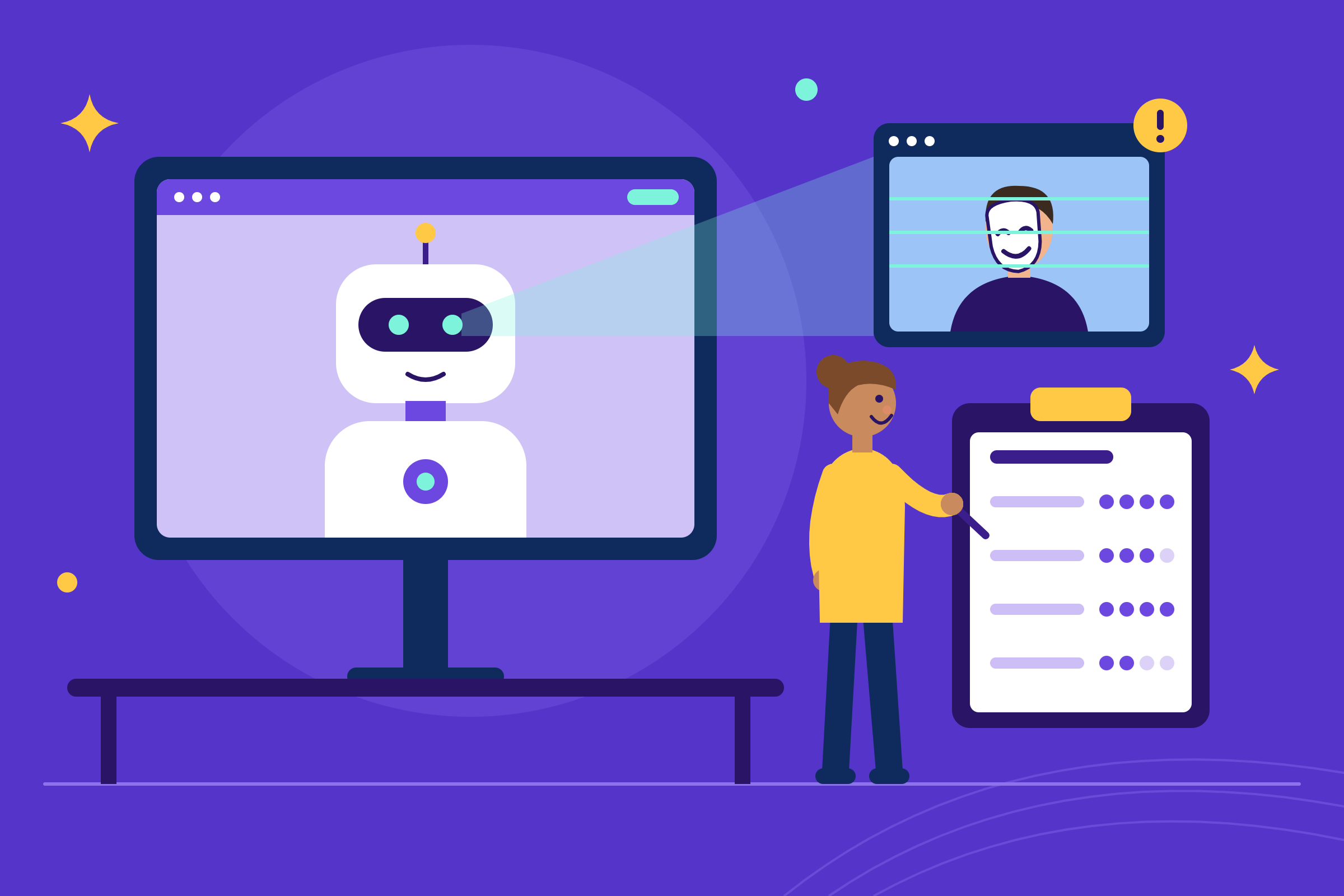
Interview-integrated detection runs during the interview, using session data to surface fraud signals without interrupting flow. The record syncs to the ATS automatically. For example, we run fraud detection on Zoom, Microsoft Teams, and Google Meet, capturing signals like deepfakes, proxy interviewing, and session anomalies directly inside the interview.
We surface detection signals to the hiring team without interrupting the interview flow, giving TA teams an auditable record of any risk signals before a candidate advances.
Hidden costs of isolated fraud tools
Ask vendors whether risk flags and audit trails write directly into the ATS candidate record, or whether they live in a separate portal that requires manual reconciliation when Legal or Compliance asks for documentation.
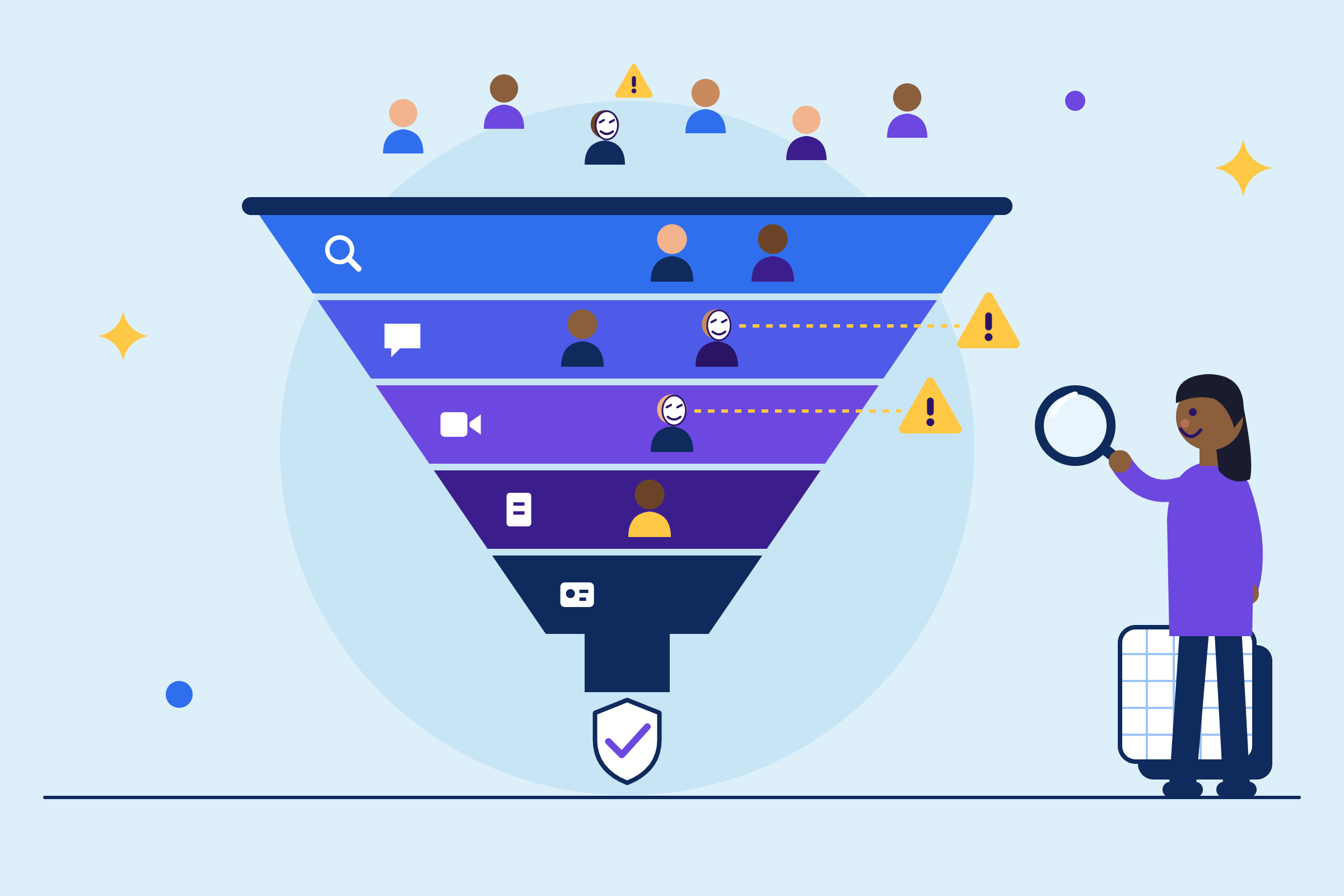
When fraud detection lives outside the interview workflow, candidates may have to complete a separate identity verification step before or after the interview. More critically, point solutions that run pre- or post-interview can’t capture signals that only surface during a live session. Proxy interviewing, real-time AI answer coaching, and deepfake video streams are invisible to tools that never join the call.
Select the right fraud detection tech
The right tool depends on your hiring volume, risk threshold, ATS, and video platform. Interview-integrated detection is worth evaluating when hiring is remote or high-volume. Both conditions increase exposure to deepfake and proxy interview risk.
If your team runs structured interviews on Zoom, Microsoft Teams, or Google Meet, and your ATS is Greenhouse, Lever, Ashby, Workday, or another platform we integrate with, interview-integrated detection can provide strong signal coverage with minimal workflow change. If you need a standalone identity verification check for a small number of high-risk roles, a point solution may cover that narrow use case. But confirm whether it captures in-interview signals like deepfakes and proxy interviewing, or whether coverage stops at pre- or post-interview identity checks.
Some teams consider building fraud detection in-house, but matching the signal depth of a specialized vendor is a significant engineering undertaking.
Buy vs. build decision matrix
| Factor | Questions to ask |
|---|---|
| Detection signals | What signals does this approach capture? Does it cover deepfakes, VPN detection, and geolocation, or is coverage limited to basic session logging? |
| Hiring context | Has this approach been tested at your team size and hiring volume, including remote and distributed hiring? |
| Risk threshold | Does this approach cover the roles with the highest system access risk, and how are flagging thresholds defined and adjusted? |
Vetting fraud detection vendors: key questions
The questions you ask in vendor conversations determine whether you surface capability or marketing claims. These questions expose gaps in detection architecture, integration depth, compliance posture, and customer outcomes.
How vendors identify hiring fraud
Ask what signals they detect and whether detection runs live or post-interview. Confirmed detection signals include deepfake detection, including altered video streams, facial mismatches, and AI-generated voice manipulation. Confirm what additional session data the vendor analyzes and whether signals like VPN detection and geolocation are available on your video platform. Our fraud detection capabilities vary by platform based on available session data.
- BrightHire Screen, the AI interviewer for early-round screening interviews, captures the fullest signal set because we control the entire interview session.
- For live interviews, Zoom provides the most comprehensive coverage with a proprietary deepfake model plus session metadata available to Zoom customers with a BrightHire subscription.
- Microsoft Teams includes deepfake detection plus IP-derived geolocation and VPN signals. Google Meet supports deepfake detection today, with additional signal coverage expected as Google exposes more session data.
Audit trails for defensible hiring
Find out what the audit trail shows: flag, timestamp, reviewer, and decision. Confirm data retention periods and deletion options with the vendor. If the vendor can’t show you this level of detail, you can’t defend the hiring decision in a legal review.
Ask whether the vendor uses customer interview data to train third-party AI models. We don’t use customer interview data to train third-party AI models, a material procurement consideration for enterprise legal and security teams.
Evaluate vendor support and success
Request customer success metrics, user satisfaction scores, and retention rates. Check how long implementation typically takes and what interviewer onboarding involves. G2 ratings with review counts are a useful baseline.
“True partnership. They actively seek to understand our goals and are receptive to feedback and how to improve. It removes manual work and administrative burdens for recruiters and interviewers who conduct interviews. It also provides additional candidate signals, such as potential fraud risk.” – Verified user on G2
If the vendor can’t provide customer outcomes and implementation examples relevant to your environment, the tool may not have been tested in similar conditions.
Build your business case for fraud detection
The business case for fraud detection ties to time-to-fill, recruiter hours saved, and risk avoided. Avoid vague ROI language. Use specific metrics you report on.
ROI framework and cross-functional buy-in
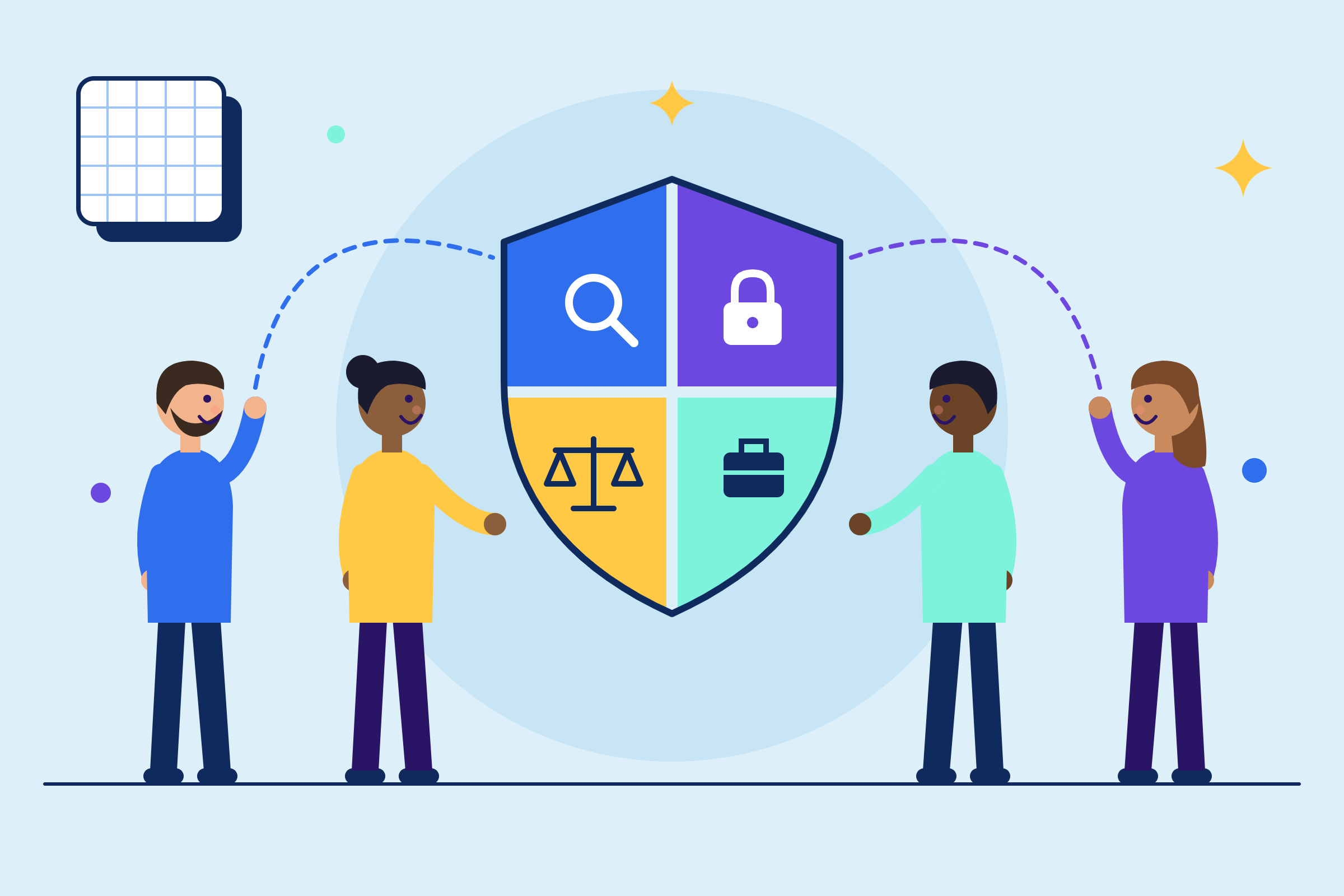
Frame fraud detection as a security investment, not just a TA tool. Legal, IT, and Finance each have a stake. Legal needs defensible hiring records and compliance with GDPR, and CCPA. IT is concerned with system access and the risk of imposters gaining credentials. Finance wants to understand the cost of bad hires and the return on the tool.
Give each stakeholder the language they need:
- For Legal: “The audit trail shows what was flagged, when, who reviewed it, and what they decided.”
- For IT: “This closes a security gap. Imposters who pass our interview process gain access to our systems.”
- For Finance: “A fraudulent hire creates financial exposure through replacement cost, lost productivity, and potential security remediation. Quantifying avoidance is more defensible than estimating breach cost.”
Typical enterprise pricing models
Most enterprise and growth-stage teams receive a customized annual contract based on team size and expected interview volume. Published list prices are rarely available, so budget conversations are best had directly with the vendor early in procurement.
Pilot success metrics and benchmarks
Define pilot metrics before the pilot starts. Metrics to use include false positive rate, candidate completion rate, interviewer adoption, and time-to-fill impact.
Before the pilot starts, set a specific threshold for each metric. For example, a candidate completion rate drop of more than 5 percentage points, a false positive rate above 2%, or interviewer adoption below 80% at the 30-day mark. If completion rate falls below your threshold, the friction is too high. If false positives exceed it, the tool is flagging too many legitimate candidates. If adoption lags at 30 days, the tool is adding steps to the interview loop.
Operationalize your new detection workflow
Implementation determines whether the tool works in practice or becomes shelfware. Onboarding, consent workflows, and success metrics are the three operational pillars.
Recruiter and hiring manager onboarding
Interviewers need to know what happens when a flag surfaces. Most teams are fully operational in under one day. We join calls automatically, no manual setup required per interview. Teams piloting BrightHire Screen without full ATS integration can begin running early-round screening interviews from day one via shareable link and add full integration when ready.
Interviewers need to know that detection runs in the background, that they don’t have to change how they conduct the call, and what to do when a flag surfaces. When a flag appears, the hiring team reviews it after the interview and decides whether to advance the candidate.
Manage candidate consent and transparency
Consent workflows need to be in place before the tool goes live, not added after implementation. Candidates should know detection is running and why. Bring these questions to your legal team before implementation.
- Does the tool require explicit candidate consent before recording?
- Does it comply with GDPR, CCPA, and other privacy regulations?
- Can candidates opt out, and what happens if they do?
- How long is candidate data retained, and who within your organization can access it after the interview?
- If a candidate requests deletion of their data, what is the vendor’s process and turnaround time?
Our compliance infrastructure includes candidate consent workflows baked in by default, GDPR and CCPA compliance, and a zero-data-retention option.
Choose the right candidate fraud detection vendor
A fraud detection tool that adds steps, creates a second system of record, or keeps risk signals outside the tools your team already uses will stall in adoption and fragment the hiring record. The evaluation criteria in this guide are designed to surface those gaps before you commit to a vendor.
We run fraud detection inside the interview and surface risk signals to the hiring team without interrupting the interview flow. Request a demo to see how detection runs inside BrightHire interviews and what a flagged risk signal looks like for your hiring team.
Frequently asked questions (FAQs)
Vendors use a combination of deepfake detection, session metadata analysis, IP-derived geolocation, VPN detection, and liveness checks. Interview-integrated detection runs during the interview using real-time session data, while point solutions typically run as standalone identity verification before or after the interview.
Detection runs inside the interview, so it doesn’t add a separate verification step for interviewers or candidates. Deepfake detection does require explicit candidate consent before it runs. Point solutions that require separate identity verification steps can add friction and increase candidate drop-off.
Interview fraud detection runs during the interview and analyzes session data, video, and audio to surface risk signals like deepfakes and proxy interviewing. Identity verification confirms that the candidate is who they claim to be, typically using document checks and liveness verification before or after the interview.
Most implementations will require legal review. Fraud detection typically involves recording interviews. If the tool processes biometric data, ask your legal team whether GDPR Article 9, CCPA, or BIPA applies to your use case and jurisdiction. Our deepfake detection follows BIPA-grade consent standards, so ask any vendor you evaluate whether they can document the same. Work with your legal team to confirm that the vendor’s consent workflows, data retention policies, and audit trails meet your compliance requirements before going live.
Interview intelligence platforms with built-in fraud detection typically charge annual platform fees based on team size and interview volume, with contracts customized per team. Standalone identity verification tools typically charge on a per-check or per-hire basis, with pricing that varies by vendor and volume. Request pricing directly from vendors, as published list prices are rarely available for tools of this type.
Key Terms Glossary
Proxy interviewing: When someone other than the real applicant answers interview questions, either by standing in completely or feeding live answers through audio, video, or a deepfake.
Liveness check: A biometric verification step that confirms the candidate is a live person, not a recording or deepfake, typically using facial movement or voice analysis.
Audit trail: A documented record showing what was flagged, when, who reviewed it, and what decision was made, used to defend hiring decisions in legal or compliance reviews.
Interview-integrated detection: Fraud detection that runs during the interview using session data, surfacing signals to the hiring team without interrupting the conversation or adding steps for candidates.
Point solution: A standalone fraud detection tool that runs as a separate identity verification or post-interview analysis layer, outside the interview workflow and ATS.