

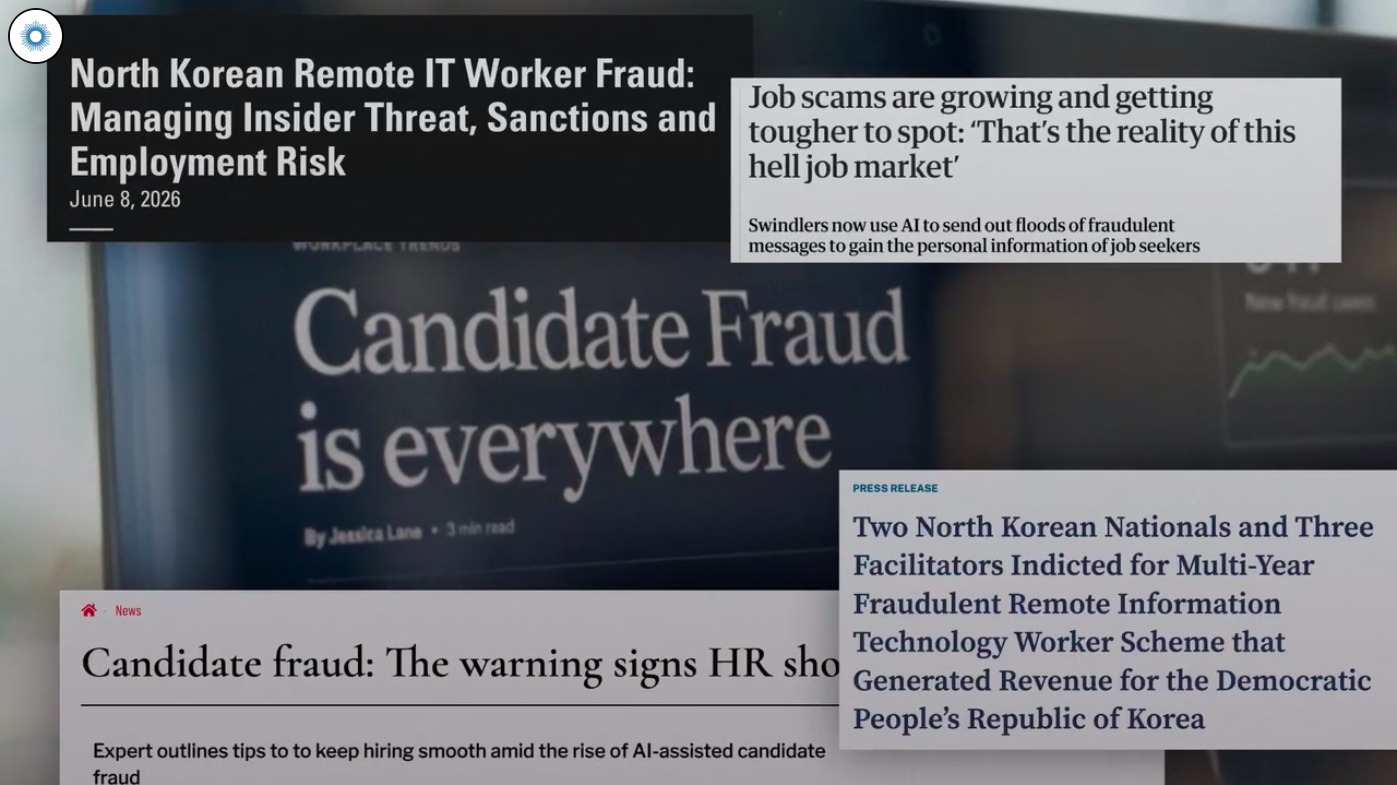
Candidate fraud is accelerating rapidly, with Gartner projecting 1 in 4 candidate profiles will be fake by 2028 and 41% of enterprises reporting they have already hired a fraudulent candidate.

Hiring depends on trust across people, systems, and handoffs – each an opening for an attacker. Remote hiring widened those openings, and AI has made them easier to exploit.

Today’s candidate fraud often goes beyond resume inflation, involving coordinated efforts to steal data, money, and access to critical systems.

Standard hiring and identity tools weren’t built for candidate fraud at today’s scale and sophistication. Catching it takes stronger detection where the risk shows up: in the interview itself.
THE SOLUTION
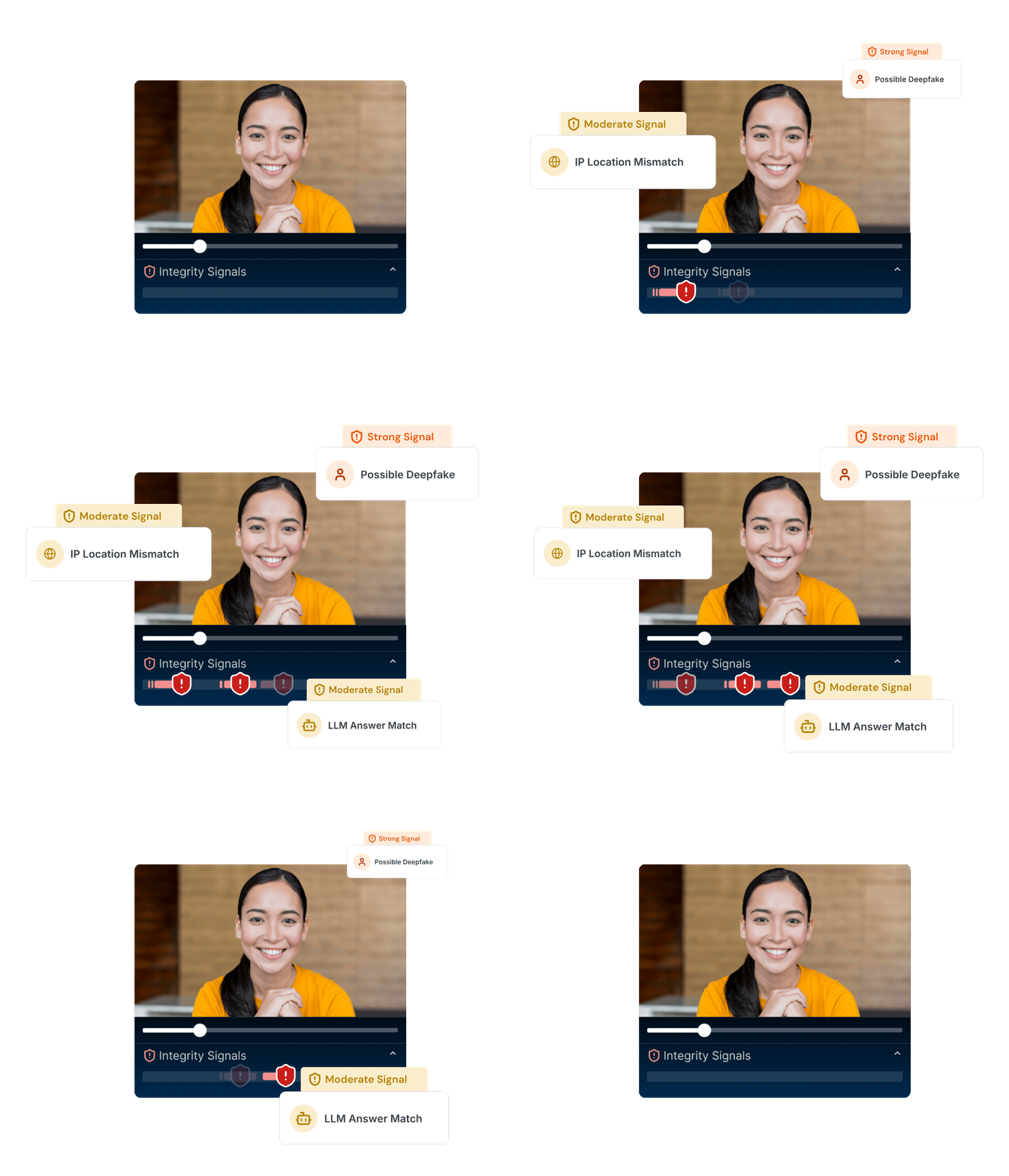
BrightHire surfaces fraud signals directly in your interview workflow, drawing on proprietary Zoom data and signals that provide more effective detection than any other solution.Detect candidate fraud in the interview
For Zoom customers, fraud detection fits directly into existing hiring workflows. BrightHire joins interviews automatically and captures signals natively in the interview platform, with no new candidate agents, no extra tools for talent or IT to manage, and no separate data flow to vet.
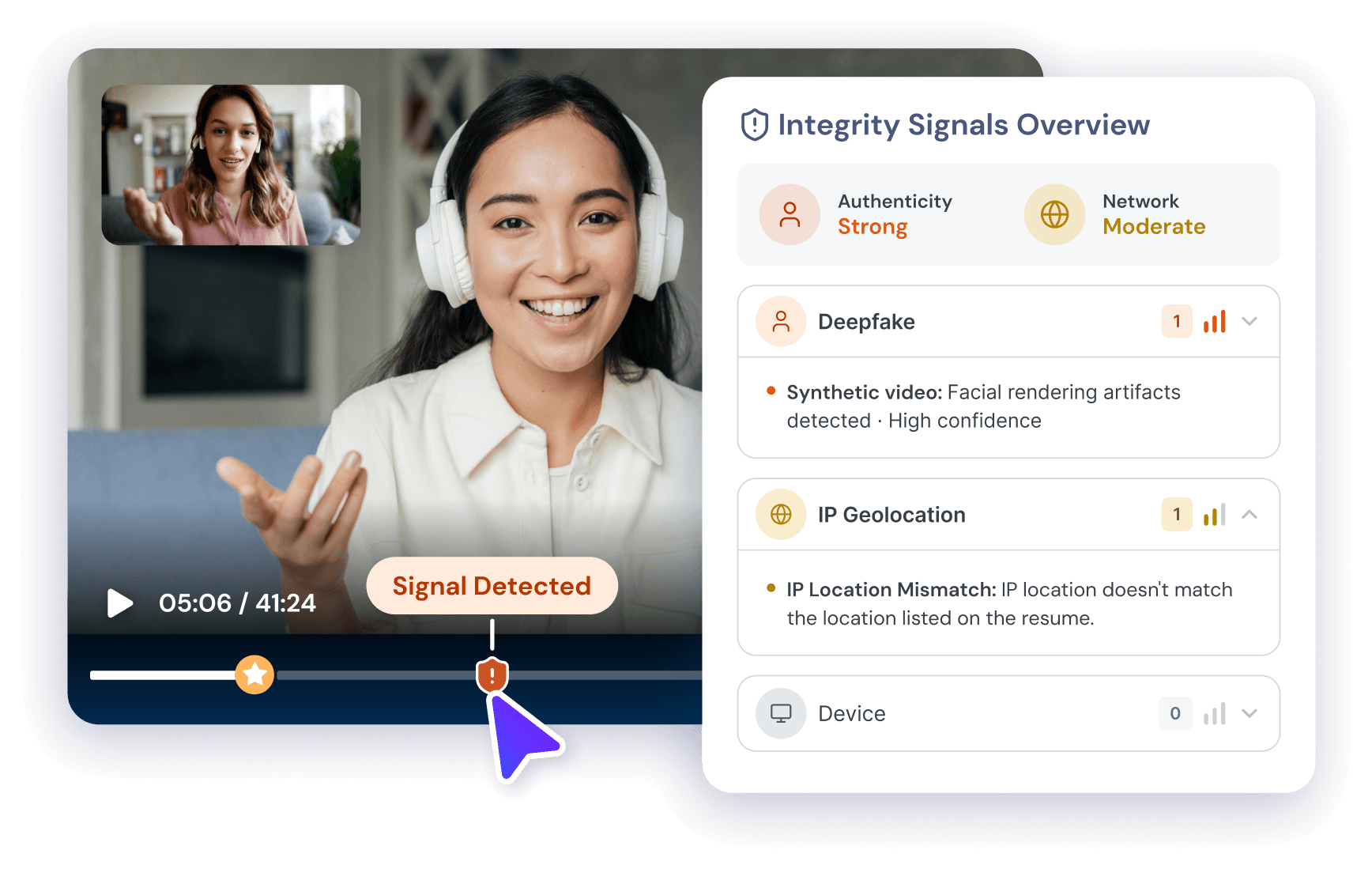
BrightHire surfaces fraud signals in interviews, so flags are raised wherever they appear, instead of at a single checkpoint a bad actor can slip past.
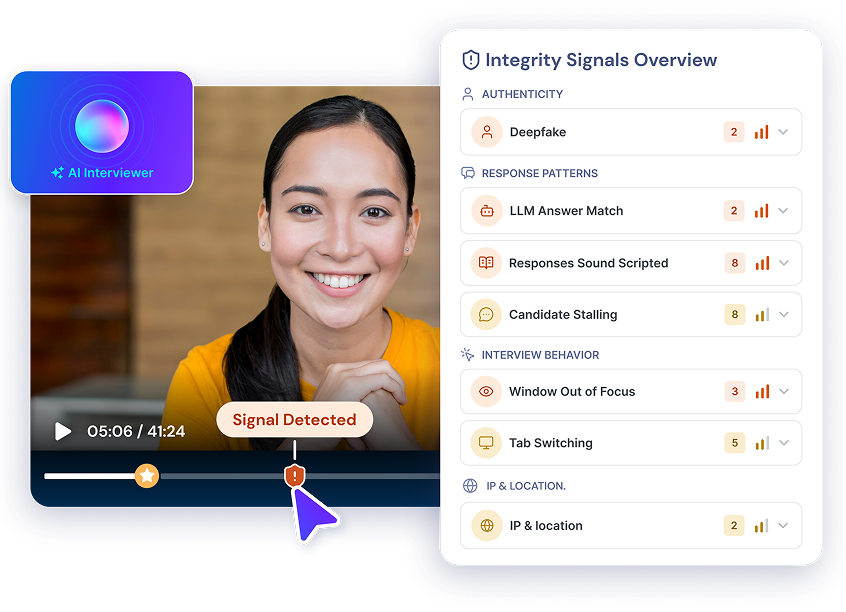
Signals across behavior, identity, device, and context come together into a single, scalable view, so your team can see the full picture.
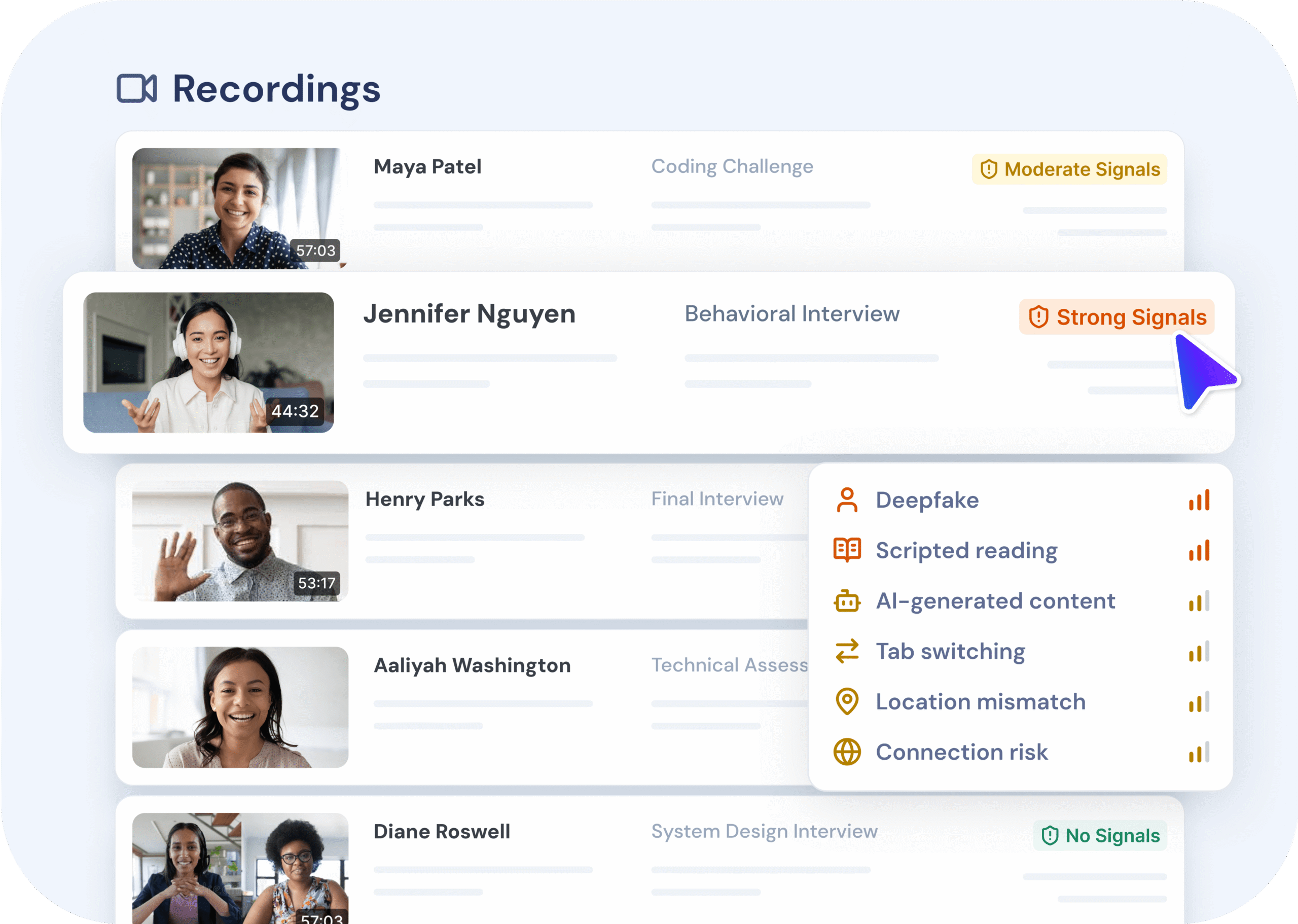
Candidate fraud takes many forms, from impersonation and AI-assisted answers to deepfakes, multi-device cheating, and manipulated identities. BrightHire looks for all of them, so a single type of attack can’t slip through unseen.
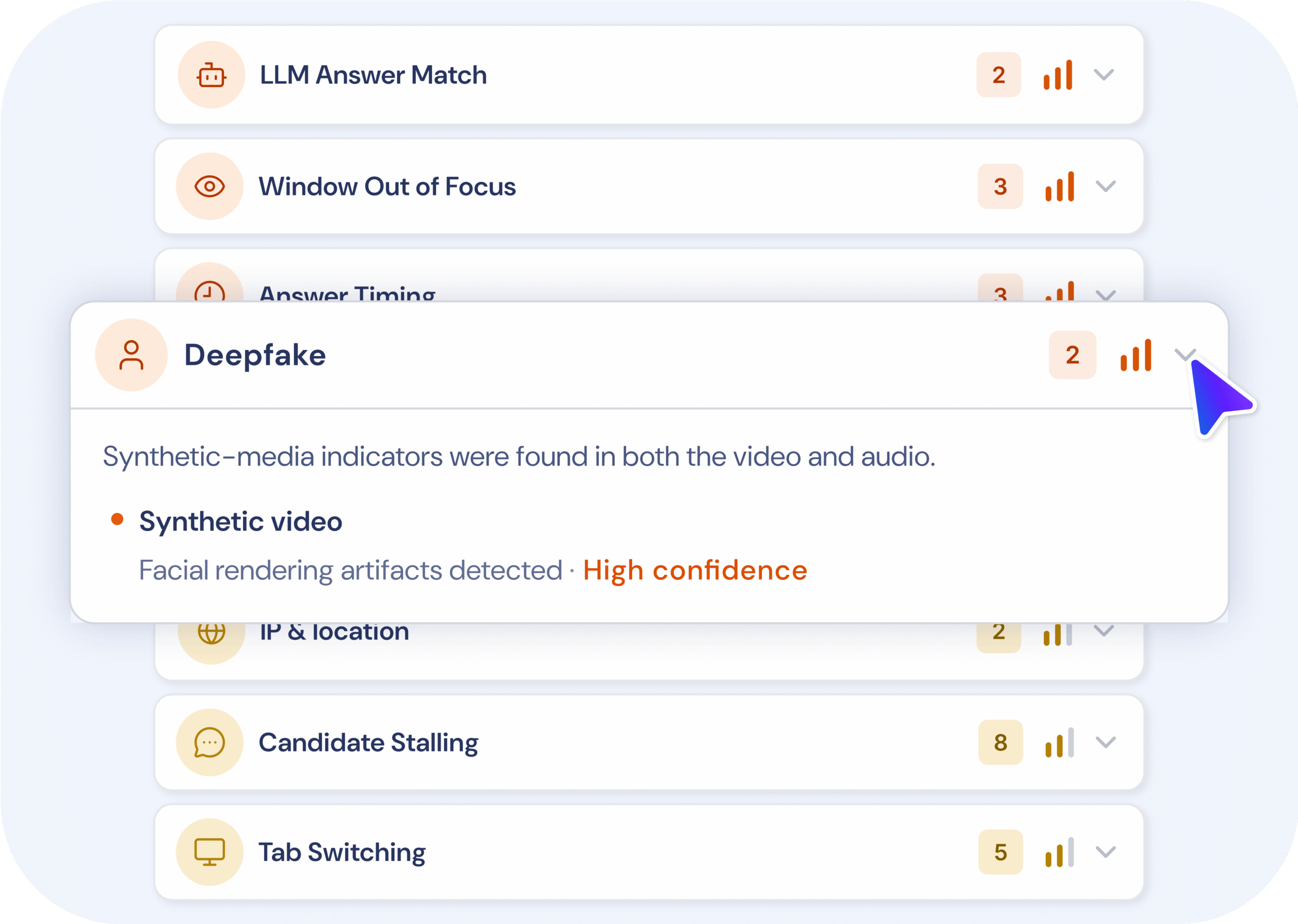
Every signal is backed by audit-ready records, so detection holds up to scrutiny.

Every flag links back to the signal that triggered it, so teams can investigate before deciding.
Every signal, review, and decision is documented, giving teams a defensible trail regulators.
Signals route candidates for review so people stay in control of every hiring decision.
Built to align with NIST 2025 digital identity guidance and emerging rules around AI in hiring.
Deep ATS integrations keep fraud signals connected to the systems hiring teams already use, backed by BrightHire’s enterprise posture.

SOC 2 Type II certified

GDPR & CCPA compliant

Candidate consent & opt-out

Role-based access controls

Customizable data retention

Zero Data Retention partner

Verified by 3rd party AI bias audit

Enterprise-grade security
Expert insights and in depth guides for candidate fraud prevention.
Interview fraud happens when someone other than the real candidate joins the call, a candidate uses unauthorized AI assistance to answer questions, or a deepfake stands in for a real person. Because interview fraud plays out in real time, the interview is where it is most exposed, and where BrightHire surfaces the flags with proprietary Zoom data and signals.
Interview fraud takes a few common forms. Someone other than the real candidate joins the call, using a stolen or borrowed identity. A deepfake stands in for a real person, presenting synthetic video on a live interview. Candidates use unauthorized AI assistance to answer questions in real time, from switching browser tabs to a second device feeding them responses. And candidates may mask their true location behind a VPN or proxy. BrightHire surfaces fraud signals across the interview, where this behavior plays out.
BrightHire surfaces fraud signals across AI screening interviews and live interviews, then brings them into a single view of risk. High-risk signals cover a candidate’s identity, presence, consistency, and behavior. Lower-risk signals include cheating during the interview. Every signal links back to the evidence behind it, so reviewers can investigate before they decide. For interviews on Zoom, proprietary Zoom models and data add detection no competitor can match.
Yes. Deepfake detection is part of the set of fraud signals BrightHire surfaces in live interviews. Each signal is presented with the evidence behind it and brought into the view of risk for every candidate, so your team can review and decide. For interviews on Zoom, BrightHire draws on proprietary Zoom models and data that strengthen detection beyond what a standalone tool can offer.
BrightHire is built for human review, so people stay in control of every hiring decision and signals are never used for automated rejection. Every signal, review, and decision is documented in audit-ready records, giving teams a defensible trail. BrightHire aligns with NIST 2025 digital identity guidance and emerging rules around AI in hiring. For questions about your specific legal obligations, consult your legal or compliance team.
This feature set is available for Zoom Workplace customers with an active BrightHire subscription. If your team interviews on Zoom and has a paid BrightHire plan, you can talk to your admin or customer success representative to enable it on your account. Zoom customers without a BrightHire subscription, get in touch with us.