





TL;DR: When evaluating AI interviewers for candidate fraud, prioritize signal depth over detection-rate marketing claims. Fraud detection quality varies by whether the AI controls the session from question delivery through response capture, or observes a live interview on a third-party platform. Ask vendors three questions: which signals are available on the platform you use for screening interviews, what is your false-positive rate and what does review look like when a flag fires, and what does the candidate experience during that process. A defensible fraud detection program requires human review protocols, ATS-native audit trails, and leadership alignment before procurement, not after.
Fraud detection appears on many AI interviewer vendors’ feature list, but the depth and reliability of what those tools actually capture varies widely. 31% of hiring managers have interviewed a candidate who was later revealed to be using a fake identity, and 41% of enterprises surveyed report having hired and onboarded a fraudulent candidate.
This guide is written for Heads of TA and VP-level recruiting leaders at mid-market and enterprise organizations who are actively building an AI fraud detection vendor shortlist, have an ATS already in place, and are accountable for both screening interview integrity and compliance documentation.
How AI interviewers flag candidate fraud
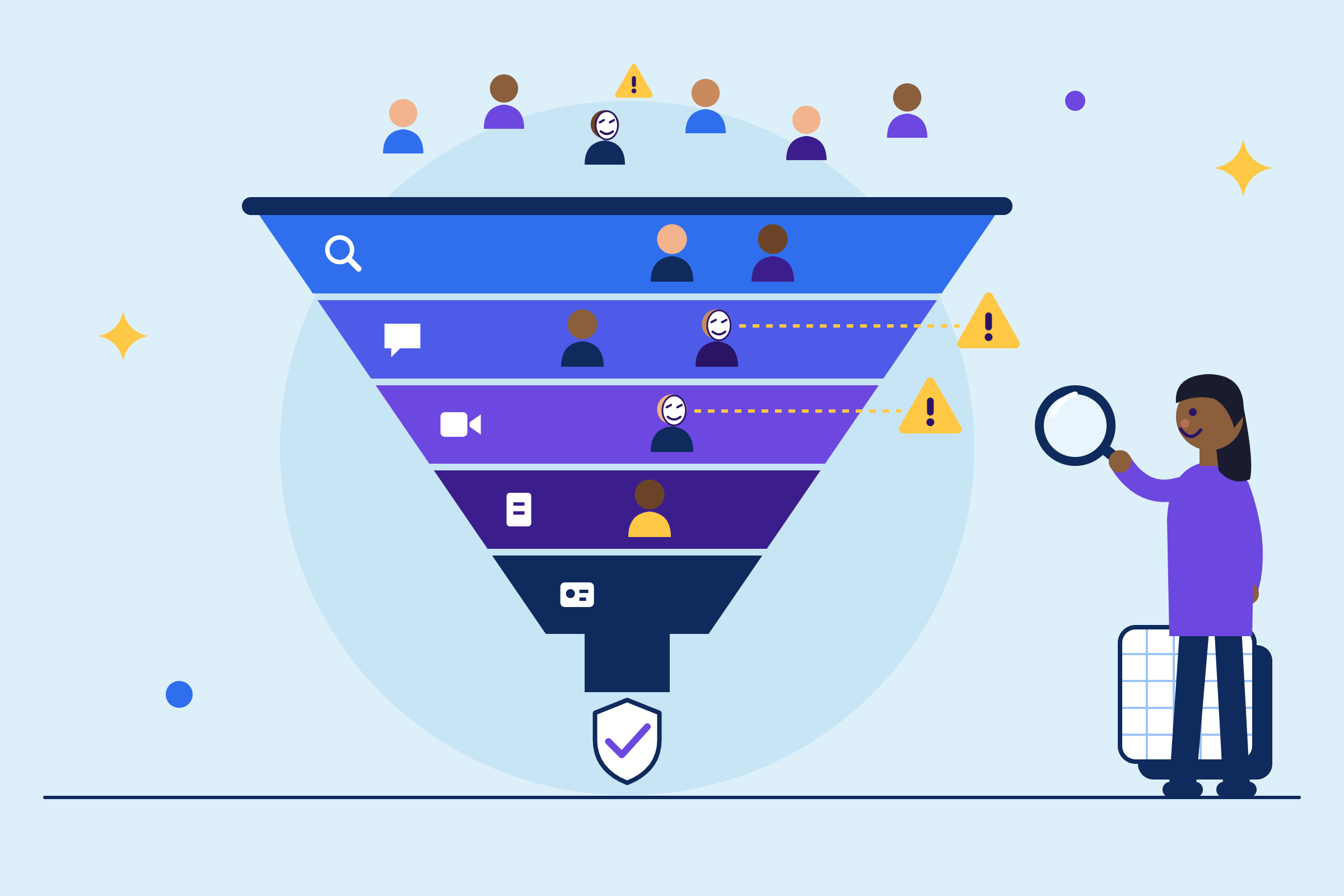
Candidate fraud in interviews has moved from resume inflation to coordinated identity deception. Detection requires capturing signals during the interview itself, not in post-call analysis.
Know which signals AI flags
Modern AI interviewers typically analyze multiple signal categories. Our fraud detection covers deepfake detection, network risk, and interview behavior. LLM Answer Match compares a candidate’s answer against the characteristics of AI-generated responses and returns a confidence score. Behavioral analysis flags delivery patterns that sound scripted rather than spoken. Session metadata analysis covers IP location, VPN usage, answer timing, and tab switching. The depth of these signals depends entirely on how the AI interviewer is architected. Specifically, whether it controls the session end-to-end or observes a live interview through a third-party video platform.
Understand the cost of fraud exposure
Candidate fraud creates multiple distinct exposures. The direct cost of a bad hire includes wasted recruiter time, onboarding investment, and the productivity gap while you backfill the role. The security exposure emerges when an imposter gains access to internal systems, proprietary data, or financial infrastructure. Legal exposure arises when a fraud incident requires breach notification or when fraud detection itself produces discriminatory outcomes without proper bias testing.
“Every touchpoint you have with a candidate is where fraud could show up.” – Josh Elmore, Global Head of Talent Acquisition and People Operations at Zoom
Compare AI detection against manual verification
The tradeoff between verification methods comes down to three variables: friction for the candidate, security coverage, and scalability across your screening interview volume.
Vendor architecture determines which signals the AI can capture, and whether those signals cover the fraud patterns that target your specific roles.
| Verification method | Friction | Security | Scalability |
|---|---|---|---|
| Manual verification | Variable | Variable | Limited |
| Passive AI detection | Low | Depends on signal access | Scales with volume |
| Hybrid (AI + human review) | Low | Strong | Scalable with capacity planning |
Must-have criteria for vetting AI interviewer fraud detection
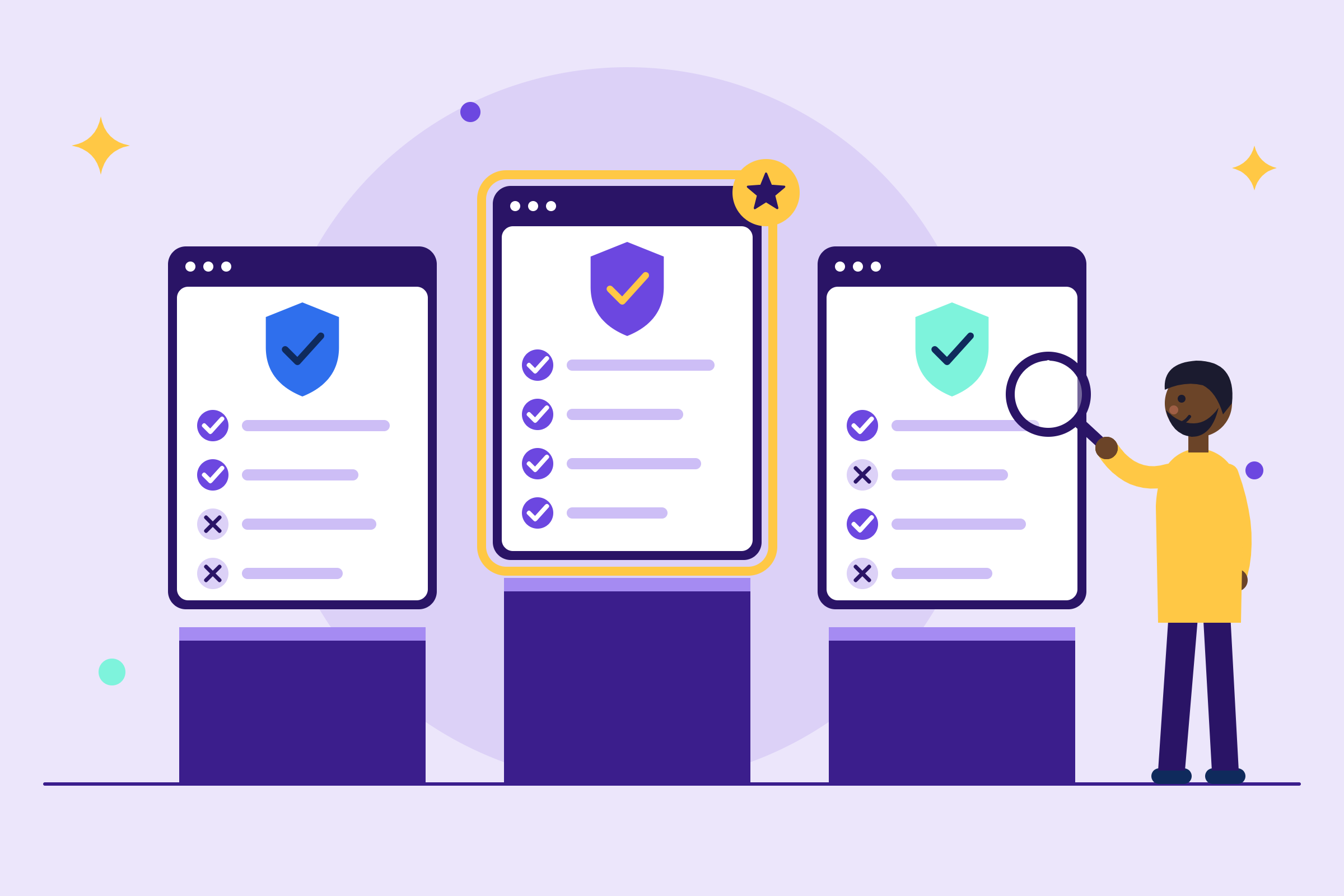
Defensible programs consistently weigh four criteria: false-positive handling, ATS integration depth, audit trail completeness, and explainability.
Evaluate false-positive rates and human review workflows
Every fraud detection system produces false positives. Low-quality recordings, compression artifacts, poor lighting, unstable internet connections, and background noise can trigger automated flags on legitimate candidates. These are the same environmental conditions that affect any video call.
In the demo, walk through a live escalation scenario: who reviews the flag, what context they see, how long review takes, and what happens to the candidate during that window. Signals should trigger human review, never automated rejection, and they should be captured in the flow of work with no friction for legitimate candidates.
A vendor who can’t articulate their false-positive mitigation process is asking you to own a compliance risk they haven’t thought through.
Verify ATS data flow and audit trail requirements
Fraud flags are useless if they live in a separate dashboard your team has to remember to check. The audit trail has to sync to the candidate record in your ATS automatically, with the same rigor you apply to scorecards and interview notes.
Request field-level sync documentation before the demo ends: which fields sync, in which direction, and at what trigger. “We integrate with Greenhouse” is not an answer. Recruiting Ops teams often disqualify vendors who cannot provide that level of specificity.
Demand compliance documentation before signing
New York City’s Local Law 144 requires an independent bias audit within one year of use, a publicly available audit summary, and at least 10 business days’ advance notice before deploying a covered automated employment decision tool for NYC-located roles or NYC-resident candidates where the tool substantially assists candidate assessment. Illinois’ AI Video Interview Act has required consent and transparency for AI analysis of video interviews since 2020.
The FTC’s action against Rite Aid, whose watchlist-matching facial recognition system generated thousands of false-positive matches, is a useful precedent to review with Legal before deploying any tool that performs facial or video analysis on candidates. Deploy fraud detection without bias testing and you may trade fraud risk for discrimination liability.
Check vendor compliance credentials before contracting
We hold GDPR and CCPA compliance, and complete an annual third-party bias audit covering both Interview Intelligence and BrightHire Screen. We don’t use customer interview data to train third-party AI models, which matters when Legal reviews data handling after the interview ends.
Request bias audit documentation, data retention policy, and model training practices before procurement. Vendors who cannot produce these during evaluation leave the compliance gap for you to close on your own timeline, not theirs.
Require explainability in human decision workflows
When a fraud flag fires, the reviewing recruiter or TA leader needs to see what triggered it: which signals fired, at what confidence level, and what supporting evidence is available. For example a confidence score for LLM Answer Match, the specific video segments flagged for deepfake indicators, and a geolocation inconsistency note.
Have vendors show you what a fraud flag looks like in their product, what information the reviewer sees, and how the system documents the human decision that follows. If the answer is “our AI is highly accurate,” push for the interface. Legal defensibility depends on a documented human decision at every flag, not on the AI’s accuracy alone.
Validate AI accuracy in candidate audits
Detection-rate marketing claims are meaningless without false-positive context, signal-depth transparency, and audit trail documentation. Your evaluation framework needs to test these claims against your specific hiring environment.
Measure AI fraud detection efficacy
Detection rate measures what percentage of fraud attempts the system catches. False-positive rate measures what percentage of legitimate candidates get flagged incorrectly. A vendor claiming 95% detection with a 15% false-positive rate means that 15% of legitimate candidates, those who are not committing fraud, will be incorrectly flagged and require manual review.
Request both metrics segmented by signal type. Deepfake detection may have different accuracy characteristics than LLM Answer Match. Session metadata anomalies may flag VPN users who are legitimate remote workers. The aggregate number hides the operational reality.
Identify high-risk interview roles
Fraud risk concentrates in roles with remote work, access to sensitive systems, or high market value. The exposure is not evenly distributed, and it is not top of mind for the leaders closest to it. GetReal’s September 2025 survey of 668 IT, cybersecurity, risk, and fraud leaders found that 41% of enterprises report having hired and onboarded a fraudulent candidate. Yet only 35% listed fake candidates as a primary concern, according to Matt Moynahan, CEO of GetReal Security.
Engineering roles with access to production systems, finance roles with payment authority, and IT roles with administrative credentials carry higher exposure than roles with limited system access.
Map your open reqs against fraud risk before you finalize vendor requirements. A tool that works for high-volume customer service screening interviews may not have the signal depth you need for senior engineering hires.
Define roles before procurement
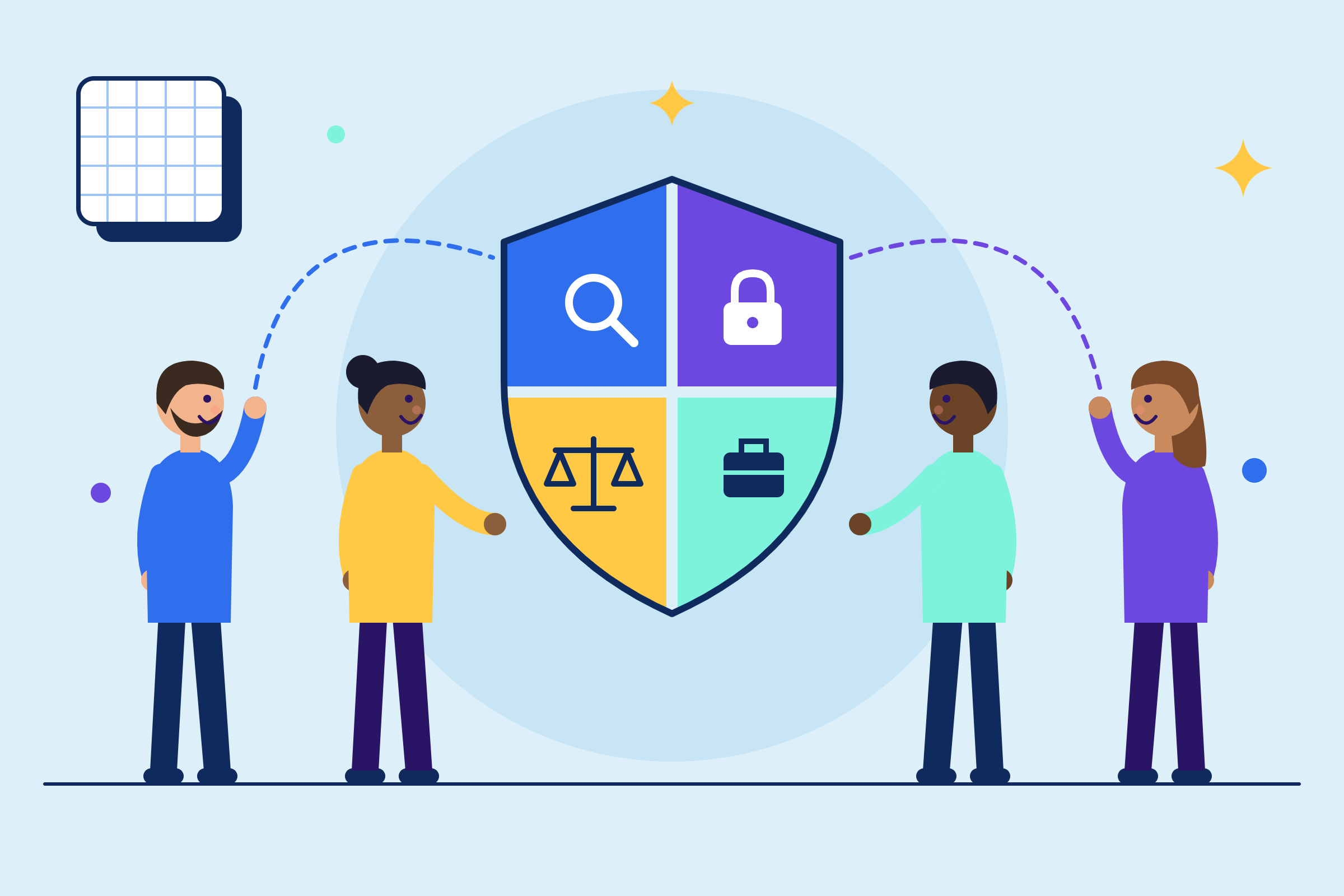
Assign ownership before procurement. TA owns the screening interview where fraud signals first surface. Security owns the incident response when a flag fires on a candidate who would gain system access. Legal owns the compliance documentation and bias audit review. Recruiting Ops owns the ATS integration and audit trail verification.
When ownership isn’t clear, fraud flags can sit in a dashboard while stakeholders debate who reviews them. Surface these ownership questions during vendor evaluation. Once the contract is signed, the question of who owns a live fraud flag becomes urgent rather than theoretical.
Structure your fraud evaluation timeline
Plan for four to six weeks from initial demo to contract signature. Week one covers vendor demos and technical requirements gathering. Week two brings Recruiting Ops into the evaluation for ATS integration review and field-level sync verification. Week three adds Legal and Security for compliance documentation review and bias audit assessment. Week four runs a pilot with live requisitions to test detection accuracy and false-positive handling in your environment.
Greenhouse and Ashby customers connect in under 15 minutes, but full evaluation including compliance review and team training extends the timeline.
Probe AI vendors on fraud prevention logic
Vendor demos show you the best case. Your job in the evaluation is to surface the edge cases, the failure modes, and the operational details that determine whether the tool works in your environment.
Ask questions that expose detection depth
Have the vendor list every fraud signal their system captures, then narrow to which of those signals are available on the platform you use for screening interviews. If their deepfake detection only works on their proprietary video platform and not the one your team already uses, that’s a gap you need to know before procurement.
False-positive handling separates a working tool from a liability. A vendor who claims a 95% detection rate without mentioning their false-positive rate is giving you half the equation. The question is what happens next.
Ask how the candidate experience changes when a flag fires. Candidates gave BrightHire Screen a 4.5 out of 5 average candidate rating, a score BrightHire attributes to the two-way conversation format. Signals fire in the background without interrupting the session. A tool that introduces visible friction at the flag stage will show up in Glassdoor reviews before it shows up in your post-implementation review.
Review SLAs and support commitments
Fraud patterns evolve, detection models need tuning, and your team needs support when a high-stakes flag fires on a critical hire. SLA commitments reveal whether the vendor has operationalized their support or is improvising it. Pin down their response time for fraud flag review support, their model update cadence, and their incident response process.
Strong detection technology with weak operational support means your team handles fraud incidents manually when volume spikes. That’s a staffing cost the vendor’s pricing model won’t reflect.
Probe model update cadence and fraud pattern coverage
Fraud tactics evolve faster than annual product cycles. Model update cadence is the clearest signal of whether a vendor is keeping pace with attackers. Find out how often they update their detection models, how they identify emerging fraud patterns across their customer base, and how they notify customers when a
new tactic requires a model change. Ask for the last three model update notices they sent to customers and what triggered each one.
Request a live audit trail walkthrough
Have the vendor walk you through a complete fraud flag from signal capture to ATS record, not the happy-path demo, but the full sequence: what fires, what the reviewer sees, what decision the human makes, and where that decision is stored. If they cannot show you a completed audit trail in a live environment, ask for an anonymized example. The ability to describe an audit trail and the ability to produce one are different things, and legal defensibility depends on the latter.
Avoid common AI interviewer evaluation errors
TA leaders evaluating AI fraud detection make predictable mistakes that surface after implementation, when the tool is live and the contract is signed. These errors are avoidable if you know what to look for during the evaluation.
Avoid over-indexing on detection rates alone
A 98% detection rate sounds impressive until you ask about the false-positive rate. A detection rate figure without the corresponding false-positive rate omits the operational cost that determines whether the tool is viable at your screening interview volume.
Protect employer brand during fraud detection
Candidates talk. If your fraud detection process adds friction, delays decisions, or rejects qualified people without explanation, that experience shows up in Glassdoor reviews and candidate NPS scores.
Prevent adoption failure before rollout
Fraud detection tools fail when interviewers don’t trust the flags, recruiters don’t know how to review them, and hiring managers don’t understand why a candidate was flagged for review. Adoption requires training, documentation, and clear escalation workflows before the tool goes live.
Request customer references from TA teams at comparable scale who have rolled out fraud detection successfully. At Angi, candidates gave BrightHire Screen a 4.8 out of 5 satisfaction rating, and at Overjet, candidates gave it a 4.4 out of 5. Both outcomes reflect programs where the implementation was built around candidate experience, not just detection coverage.
Align leadership on AI fraud detection
Fraud detection is a TA problem, a security problem, and a legal problem. Getting budget approved and adoption to stick requires alignment across all three functions before you sign a contract.
Build the business case
The CFO conversation starts with risk quantification. The Checkr and GetReal figures from the opening of this guide establish baseline fraud risk for the Finance conversation. At your screening interview volume, those figures are context for the conversation with Finance, not a ceiling on your exposure.
That exposure means Legal and Security often have budget authority alongside TA.
Present the vendor evaluation as a risk mitigation investment with measurable ROI, not a TA tooling request. Frame it as the difference between discovering fraud after the hire and catching it during the screening interview.
Come prepared with your screening interview volume and the vendor’s pricing model. Vendors who cannot help you model the business case are unlikely to support the ongoing measurement Finance will expect after approval.
Train your team
Recruiters and interviewers need to know three things: what fraud signals the system captures, what happens when a flag fires, and what their role is in the review process. The vendor should provide onboarding support, documentation, and ongoing training resources.
See how BrightHire handles fraud detection
If you’re building a vendor shortlist and want to see signal depth, false-positive handling, and the audit trail workflow in a live environment, request a demo. If your team runs on Greenhouse, Workday, Lever, Ashby, or another ATS we integrate with, we can walk you through how BrightHire connects to your existing setup.
Frequently asked questions (FAQs)
Accuracy depends on signal depth, which varies by whether the AI controls the whole session or observes a live interview on a third-party platform. BrightHire Screen carries the most robust signal set because we power the session entirely, while live interview coverage varies by platform with Zoom delivering the fullest detection.
Illinois’ AI Video Interview Act requires explicit consent before AI analysis of video interviews, and New York City’s Local Law 144 requires at least 10 business days’ advance notice before deploying a covered automated employment decision tool for NYC-located roles or NYC-resident candidates where the tool substantially assists candidate assessment. We build candidate consent workflows into BrightHire by default so disclosure happens before the session begins, and signals are captured during the session without any visible step added to the candidate’s experience.
Signals trigger human review, never automated rejection. A recruiter or TA leader reviews the flag, evaluates the supporting evidence, and makes the final decision on whether to advance the candidate.
Yes, if the system produces false positives without human review or if decisions lack documented audit trails. New York City’s Local Law 144 and Illinois’ AI Video Interview Act impose specific requirements for bias audits, consent, and transparency.
Plan for four to six weeks from initial demo to contract signature, including technical review, compliance review, and a pilot phase. Greenhouse and Ashby customers connect in under 15 minutes, but full evaluation with compliance and training extends the timeline.
Key terms glossary
Deepfake detection: AI analysis of video and audio streams to identify synthetic media and rendering artifacts that indicate a fabricated identity. The system examines facial movements, voice patterns, and visual inconsistencies across every session, and a human reviews every flag before any decision is made.
LLM Answer Match: A fraud signal that compares a candidate’s interview responses against the characteristics of AI-generated text and returns a confidence score. A high-confidence match is a signal for human review.
Session metadata: Technical data captured during the interview including IP address, geolocation, VPN usage, tab switching, and answer timing. The specific signals available vary by platform architecture. These signals provide context that video analysis alone cannot capture.
Signal depth: The range and quality of fraud indicators an AI interviewer can capture, determined by whether the AI controls the interview session or observes it on a third-party platform. A wider signal set gives human reviewers more evidence to evaluate each flag.
Human-in-the-loop: A fraud detection workflow where AI surfaces signals for human review and humans make all final decisions. This approach ensures legal defensibility by maintaining documented human judgment at every decision point.
Bias audit: An independent third-party evaluation of an AI system’s impact across demographic groups, required by employment AI regulations in New York City and other jurisdictions. Bias audits test whether fraud detection systems produce discriminatory outcomes.