





TL;DR: Interview intelligence software records, transcribes, and structures live interviews, then pushes AI-generated notes and scorecards into your ATS automatically. BrightHire is built for enterprise Talent Acquisition (TA) teams running structured, high-volume hiring. It captures and structures every interview, surfaces interviewer performance patterns across your full interview corpus, and pushes AI-generated scorecards into your ATS automatically. Native integrations cover Greenhouse, Lever, Ashby, and Workday. Compliance includes SOC 2 Type II and GDPR. If your requirement is a lightweight notetaker, Metaview offers a low-friction free tier. If it’s assessment science and AI-scored interviews, HireVue serves a distinct buyer within enterprise HR. If it’s live interview intelligence with ATS-native structured scoring, compliance documentation, and a debrief process grounded in shared evidence, BrightHire is built for that workflow.
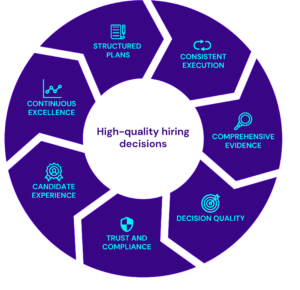
Quality of hire improves when the quality of the interview process improves. Interview intelligence software captures what happens in your interviews, but the value is in what it does next: guiding interviewers through the plan while the call is happening, pushing evidence-based scorecards into your ATS, and showing you which interviewers are consistent and which need coaching. That distinction matters when you’re evaluating tools, because a lot of what gets sold as interview intelligence is really just note-taking.
This guide covers what the category delivers, what to look for when selecting a tool, and how BrightHire compares to the alternatives.
The role of interview intelligence software
Interview intelligence software connects your video conferencing tool to your ATS. It joins every structured interview, captures what happens, and turns that conversation into searchable, auditable evidence that lives in the candidate record your team already uses. BrightHire’s interview intelligence overview breaks down the category mechanics in detail.
Your ATS manages the pipeline: req status, candidate stage, offer letters, reporting. What it doesn’t manage is the interview itself. The most consequential conversation in your hiring process (the live interview where candidate signal surfaces) leaves no structured trace in most organizations. Interview intelligence fills that gap.
Three pressures created the category:
- Distributed hiring meant TA leaders could no longer sit in on interviews and calibrate interviewers directly.
- AI transcription and summarization became accurate enough to replace manual note-taking reliably.
- Compliance requirements for documented, criteria-based hiring decisions tightened, especially for enterprise teams in regulated industries.
How interview intelligence platforms function
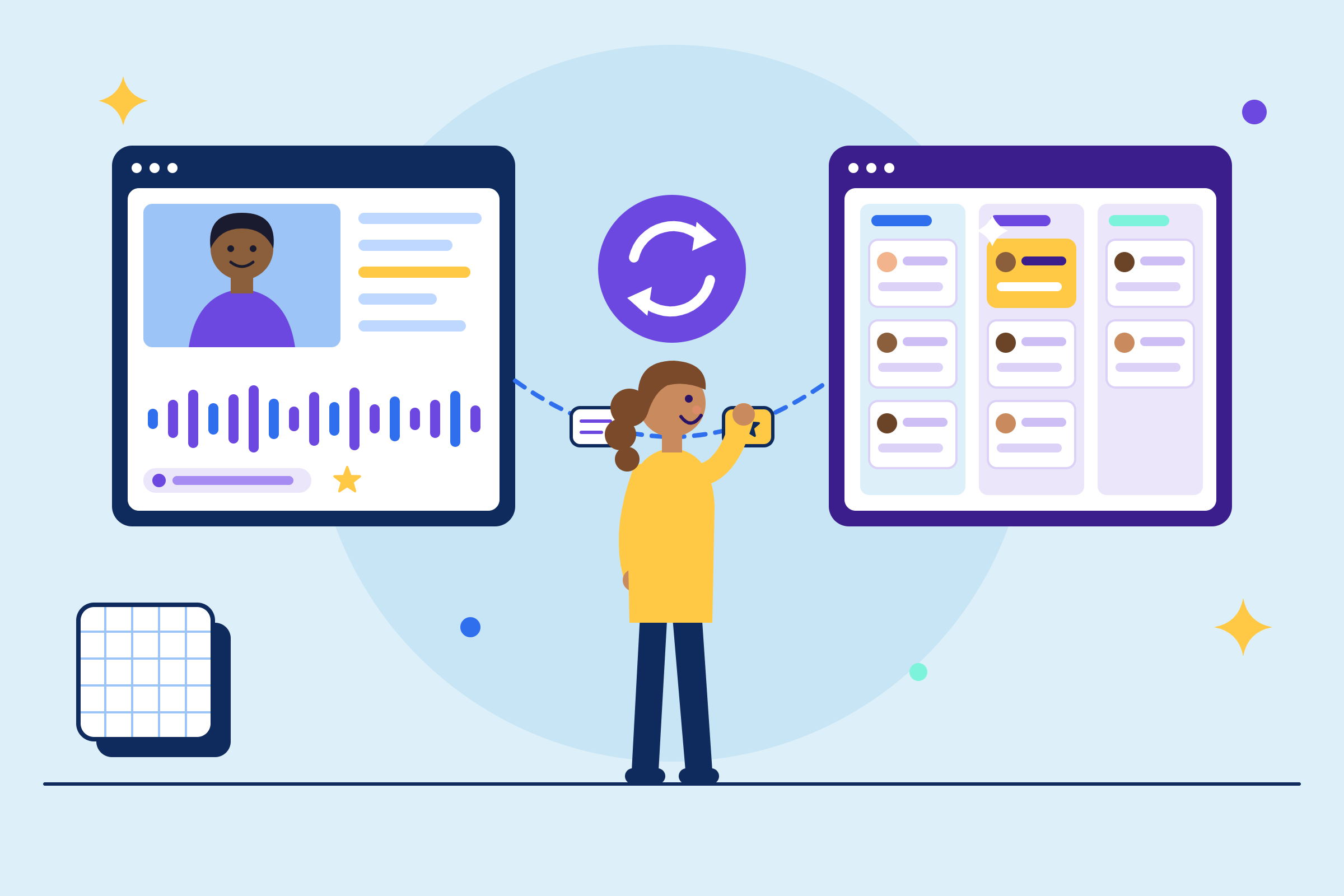
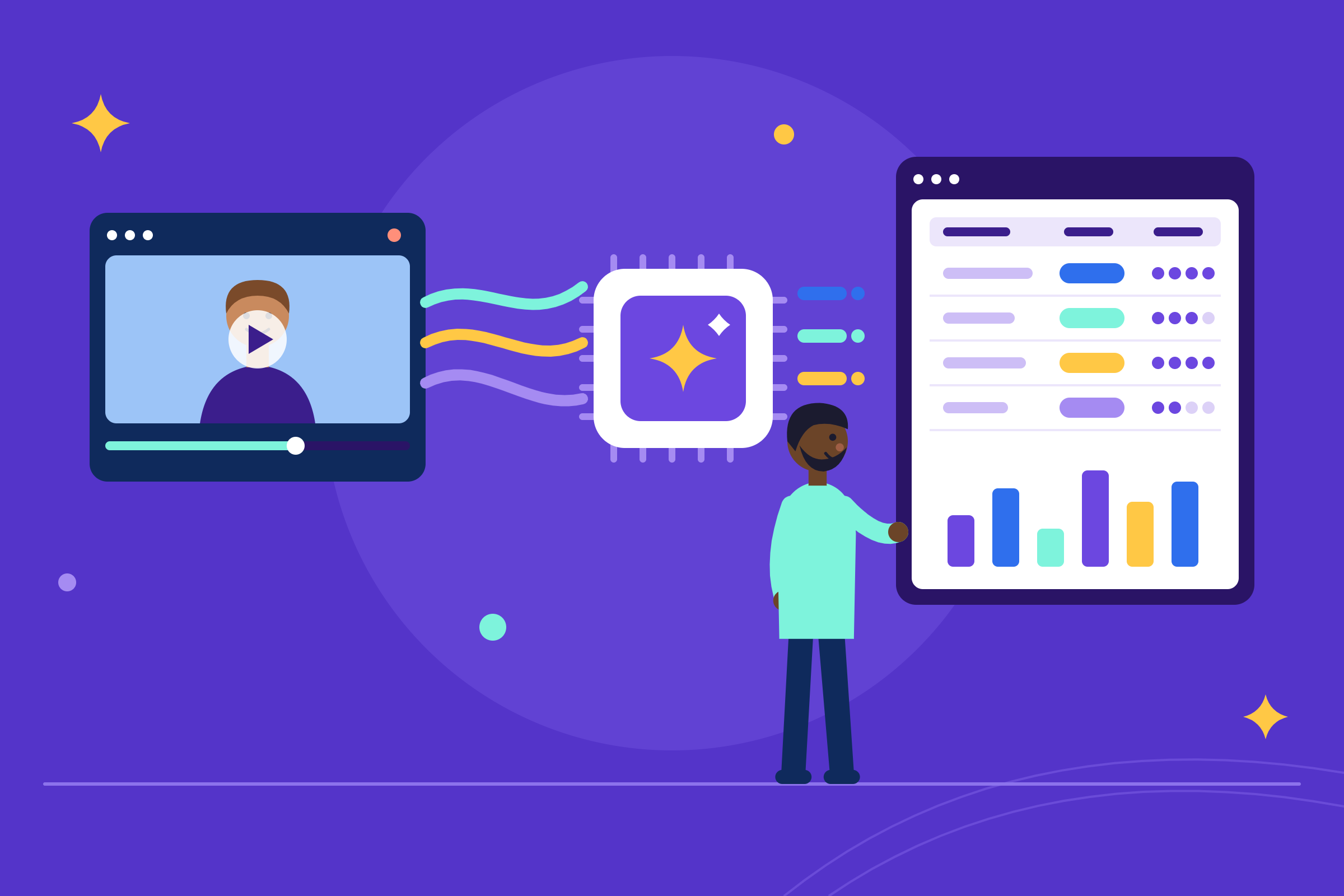
The core mechanism is straightforward. The platform joins the interview alongside your team (on Zoom, Google Meet, or Microsoft Teams), records and transcribes in real time, and surfaces an interview guide to keep the interviewer on track. When the call ends, it generates AI notes, highlight clips, and a pre-filled scorecard mapped to your evaluation criteria, then pushes everything back to the ATS automatically.
The data that accumulates across interviews also gives TA leaders something they’ve rarely had: visibility into the process itself. You can see which interviewers follow the structured plan and which go off-script, where candidates consistently drop off in the funnel, and whether scorecard feedback reflects what was actually said. That corpus of interview data is what makes coaching conversations specific, debrief decisions defensible, and process improvements measurable over time.
Interview intelligence vs. ATS functionality
Your ATS tracks where a candidate is in the funnel. It doesn’t capture what happened inside the interview, whether the interviewer followed the plan, or whether the feedback in the scorecard reflects what the candidate said.
BrightHire’s ATS integrations show how the two systems work together: interview guides pull from the ATS before each call, and AI-generated scorecards push back to the candidate record when the call ends. The ATS remains the system of record. Interview intelligence makes the data inside it more complete and more reliable.
What interview intelligence delivers operationally
The proof that matters is what changes in your funnel metrics, debrief quality, and team capacity. Here’s what each capability produces against the outcome it changes.
Teams using BrightHire ran 27% fewer interviews per hire, reduced time from interview to scorecard submission, and saw a 28% increase in pipeline efficiency. Those aren’t marginal gains. They represent a structural improvement in how quickly and confidently hiring decisions get made.
Structured capture starts every debrief the same way
Structured capture produces a timestamped transcript, a consent record, and a criteria-based scorecard for every interview. When legal, HR compliance, or an external auditor requests documentation of your hiring decisions, that record shows who interviewed the candidate, which questions were asked, how each competency was evaluated, and whether the candidate consented to being recorded. Without it, you’re reconstructing the decision from memory and hoping the explanation holds up under scrutiny.
AI scorecard auto-fill speeds up submission
AI scorecard auto-fill translates interview transcripts into pre-populated scorecards mapped to your evaluation criteria. Interviewers review and submit rather than writing from scratch. Teams using this capability submit feedback 28% faster, which means your debrief data reflects what was said in the room, not what the interviewer remembered hours later. When scorecards are pre-filled from the transcript and pushed to the ATS automatically, submission rates and submission speed both improve.
In-interview guidance keeps interviewers on plan
In-interview guidance surfaces the structured plan live during the call. Interviewers see the competencies they should be evaluating and the questions mapped to each one. This keeps every interviewer calibrated to the agreed framework without requiring manual enforcement from your team after the fact.
When every interviewer evaluates against the same competencies and follows the same structured plan, debrief comparisons are grounded in shared criteria rather than individual interpretation.
Highlight clips replace recollection with evidence
Highlight clips and AI-generated notes replace “I think she was strong” with “here is the clip where she walked through her approach.” The debrief shifts from a negotiation between different recollections to a decision grounded in shared evidence.
When debrief decisions are grounded in shared evidence rather than panel memory, calibration sessions become more productive and hiring decisions become more defensible. The downstream effect is improved quality of hire, measured not just by retention but by whether the person you hired matches the competencies you evaluated for.
Interviewer visibility closes the coaching gap
If an interviewer skips competency areas, asks the wrong questions, or gives candidates an inconsistent experience, you often have no way to know it’s happening. Interview Insights surfaces those patterns across every interview your team runs: which interviewers follow the plan and which go off-script, where coaching would help most, and compliance flags for high-risk questions.
Structured capture creates an audit-ready record
For enterprise teams facing compliance scrutiny, this isn’t optional. It’s the difference between demonstrating that hiring decisions are criteria-based and hoping nobody asks.
Scale early-round volume without adding headcount
BrightHire offers a separate product, BrightHire Screen, that runs early-round screening interviews on the candidate’s own schedule. Candidates complete a structured voice interview, and results (score, summary, rubric comparison, full recording) sync back to your ATS
automatically. Screen earns a 4.5/5 average candidate rating at scale, and teams using BrightHire see a 19% reduction in candidate drop-offs. This is how you handle volume spikes without proportional recruiter headcount growth.
How to select interview intelligence software
When you are evaluating interview intelligence tools, it’s important to understand the operational capabilities that determine whether the tool changes how your team makes hiring decisions.
How ATS sync impacts hiring quality
Integration depth is the most important criterion for enterprise buyers, but be clear about what lives where. Scorecards, AI-generated notes, and highlight clips push to your ATS automatically when the call ends. Interviewer performance data, coaching insights, and Interview Insights analytics live in BrightHire.
Ask every vendor: which ATS platforms do you integrate with natively, which fields sync, in which direction, and at what trigger? BrightHire integrates natively with Greenhouse, Lever, Ashby, and Workday, with the deepest on Greenhouse. If a vendor can’t answer with field-level specifics, that’s a disqualifying gap.
Ensuring high interviewer adoption rates
Adoption risk is the primary implementation hurdle. Look for automatic join (no per-interview setup), no separate login, and minimal workflow disruption.
Automating candidate consent workflows
Enterprise legal teams will ask about consent workflows, data retention, and audit trails before they approve any tool that records interviews. BrightHire carries SOC 2 Type II certification (an independent audit of security controls and data handling), GDPR and CCPA compliance (data privacy regulations covering European and California residents), and a Zero Data Retention option with its AI sub-processors (meaning interview data is not stored by third-party AI providers and is not used to train external models). For regulated industries, this is a prerequisite, not a differentiator.
Quantifying hiring quality for Finance
The ROI framework that survives a CFO review ties interview intelligence to metrics you already report on: time-to-fill, scorecard completion rates, and interviews per hire. When you can show that structured evidence reduces interviews per hire and increases pipeline efficiency, the budget conversation gets easier. Frame the investment as a reduction in cost-per-hire and mis-hire risk, not as a new line item.
Implementation roadmap for talent leads
Speed to value matters. Teams piloting without ATS integration can use ATS-less mode from day one via a shareable link, then add full integration when ready. This means you can start generating evidence before the procurement cycle completes.
Comparing today’s interviewing solutions
The table below compares the major options across target market, core offering, key strengths, pricing, and key limitations for enterprise TA teams.
| Platform | Target Market | Core Offering | Key Strength | Pricing | Key Limitation |
|---|---|---|---|---|---|
| BrightHire | Enterprise/growth-stage TA teams | Interview intelligence + live AI screening interviews, ATS-integrated | Integration depth, compliance posture, structured hiring framework | Custom enterprise quotes | No public pricing, transcription gaps on non-English content |
| Metaview | Mid-market to enterprise TA teams (50–5,000+ employees) | Lightweight AI notetaker | Permanent free tier, low-friction entry point | Free tier + published paid tiers | Lacks in-interview guidance, structured scoring framework, and compliance infrastructure for regulated enterprise workflows |
| HireVue | Large enterprise HR | AI-driven video interviewing and assessment | Assessment science depth, established brand | Custom enterprise quotes | Buyer is typically HR leadership, not TA ops |
| Pillar | Enterprise TA teams | Interview intelligence with coaching | In-interview coaching, now backed by Employ | Custom enterprise quotes | Post-acquisition roadmap may shift under Employ |
Scaling hiring with BrightHire
BrightHire is built for enterprise TA teams who need every interview structured, documented, and improvable. It’s purpose-built for interviews rather than bolted onto an ATS, and the benchmarks and coaching insights it surfaces are drawn from millions of hiring conversations captured across the platform.
The other differentiators are integration depth, with native bidirectional sync across Greenhouse, Lever, Ashby, and Workday, and compliance infrastructure that covers SOC 2 Type II, GDPR, CCPA, Zero Data Retention, and annual third-party bias audits. BrightHire holds a 4.7/5 rating on G2 across 182 verified reviews, and is trusted by teams at LinkedIn, SoFi, HCA Healthcare, and Gartner.
Metaview
Metaview offers a permanent free tier (up to 25 calls per month) that gives individual recruiters and small teams a low-friction way to test AI interview notes. For enterprise teams evaluating interview intelligence tools, BrightHire’s deeper ATS integration and structured hiring framework address the consistency and compliance requirements that a lightweight notetaker does not cover.
Pillar
Pillar, acquired by Employ in March 2025, offers in-interview coaching and ATS integrations. Employ is a recruiting and talent acquisition technology company that owns JazzHR, Lever, and other talent acquisition platforms. BrightHire pairs the same in-interview guidance with a compliance posture (SOC 2 Type II, annual bias audit, Zero Data Retention) and documented enterprise deployments at companies including Canva, HubSpot, and Instacart that give procurement teams more to work with.
HireVue
HireVue’s platform emphasizes science-backed assessments, game-based evaluations, and AI-scored interviews, serving a distinct buyer persona within enterprise HR. For TA leaders whose primary need is capturing and structuring live interviews (not replacing them with assessments), BrightHire’s focus on live interview intelligence and ATS-native workflow addresses a different operational problem.
Software alternatives for TA leaders
BarRaiser, Alex AI, Tenzo AI, and Maki each serve specific niches: interview-as-a-service, live two-way AI screening interviews, AI-powered phone and video screening interviews, and AI-driven candidate screening and interview scheduling respectively.
For enterprise TA teams evaluating interview intelligence software as a category, BrightHire’s combination of live interview capture, structured scoring, ATS integration depth, and compliance infrastructure covers the full workflow from early-round screen to debrief decision. Teams scaling quickly can review BrightHire’s interview intelligence overview for a category-level view.
Request a demo to see how BrightHire syncs with your ATS and what an AI-generated scorecard looks like in your candidate record.
FAQs
Your ATS manages the pipeline: req status, candidate stage, and reporting. Interview intelligence captures what happens inside the interview itself (the conversation, the scorecard, the evidence) and pushes it into the ATS automatically. They’re complementary systems, not competing ones.
Adoption depends on whether the tool requires behavior change. BrightHire joins calls automatically with no per-interview setup, and interviewers don’t need to log into a separate system.
Structured capture creates a consistent, auditable record of every interview, including consent workflows, criteria-based evaluations, and flagged high-risk questions. BrightHire carries SOC 2 Type II certification, GDPR and CCPA compliance, and does not use customer interview data to train third-party AI models.
Start with your ATS. If you run Greenhouse, Workday, or Ashby, confirm the vendor integrates natively with field-level sync specifics. BrightHire integrates with Greenhouse (deepest), Lever, Ashby, Workday, and others, plus Zoom, Google Meet, and Microsoft Teams for interview capture.
Key terms glossary
Interview intelligence: Software that captures, structures, and analyzes live interviews, then pushes AI-generated notes, scorecards, and highlights into your ATS. It turns the interview from an undocumented conversation into auditable evidence.
Scorecard: A structured evaluation rubric tied to role competencies. Interviewers complete scorecards after each interview to document their assessment against shared criteria.
Debrief: The post-interview meeting where the hiring panel reviews feedback and makes a decision. Without structured evidence, debriefs default to whoever remembers the most or speaks loudest.
Calibration session: A structured alignment meeting where interviewers agree on what “good” looks like for a role before interviews begin. Calibration ensures every interviewer evaluates against the same standard.
ATS integration: The connection between your interview intelligence platform and your applicant tracking system. Bidirectional sync means interview guides pull from the ATS before the call and scorecards push back after.
Structured interview: An interview format where every candidate for a given role is evaluated against the same competencies, using the same questions and scoring criteria. Structured interviews produce comparable data across candidates.
Talent Acquisition (TA): The function responsible for recruiting, hiring, and onboarding new employees. TA teams manage the hiring process from job requisition through offer acceptance.
Quality of hire: An outcome-based measure of whether the person you hired meets the performance expectations for the role, beyond retention. It includes competency alignment and hiring manager satisfaction.